

Blog

Operations & Maintenance
Total Productive Maintenance: A Quick Guide
Find out what total productive maintenance is, what its benefits are, and how a tool like CMMS helps enable it.
Key Takeaways:
TPM is a culture shift where everyone is responsible for equipment care and maintenance.
Initial TPM costs for training and setup are offset by reductions in expensive unplanned downtime and defects.
CMMS is a powerful tool that can support the implementation of TPM.
As you probably know first-hand, unexpected equipment breakdowns are incredibly expensive and frustrating for your operations.
The cause?
More often than not, machines aren't getting consistent care from everyone, and maintenance crews wait for something to go wrong before they step in.
If this sounds familiar, this guide is for you.
In it, we’ll explore total productive maintenance (TPM): a team-based strategy that can help you work toward zero breakdowns and maximum efficiency.
What is Total Productive Maintenance (TPM)?
At its core, TPM is a strategy that gets everyone in a company, from the factory floor to the management office, involved in equipment maintenance.
It originated in Japan in the 1970s as a comprehensive way to improve manufacturing operations.
Seiichi Nakajima, the father of TPM, defines it in his foundational book, Introduction to TPM, in the following way:
Illustration: WorkTrek / Quote: Introduction to TPM
Nakajima's idea was so powerful because it used the established American preventive maintenance practices of fixing small problems before they turn into big, expensive breakdowns.
He then combined this with the Japanese philosophy that quality isn't just one department's job, and machine care isn't just the maintenance crew's job.
Instead, it is everyone's responsibility, from the operator running the machine to the manager creating the schedule.
This team-based approach has a few specific goals, outlined below.
Source: WorkTrek
The central aim of TPM is to build an operation with zero unexpected breakdowns and machine-caused defects.
This is obviously a very ambitious target, and "zero" might not be 100% achievable all the time, but the TPM process is designed to get you incredibly close.
And it's not just about the machines, either.
A critical part of the "total" concept is aiming for zero worker accidents, too.
After all, a clean, well-organized, and properly functioning machine is a much safer machine to be around.
And, when you successfully reduce breakdowns, defects, and safety incidents, the natural result is that your equipment is utilized to its maximum potential.
To summarize, the TPM philosophy aims to create a complete cultural shift where everyone in the organization takes ownership of equipment reliability.
The ultimate goal is achieving as close to perfect production as possible.
What Are the Pillars of TPM?
So, how do you actually achieve those big goals we just talked about?
To explore that, we need to look at the eight foundational pillars of total productive maintenance.
Source: WorkTrek
The most well-known pillar is Autonomous Maintenance.
This is where you empower machine operators, not just maintenance teams, to handle daily cleaning, inspection, and lubrication for their own equipment.
As a result, maintenance teams have more time for Planned Maintenance instead of tackling routine tasks, and resources are saved for Focused Improvement, where cross-functional teams improve overall equipment operations.
To tackle product defects, the Quality Maintenance pillar embeds quality checks and error-proofing into the production process, aiming to stop defects.
TPM also looks to the future with Early Equipment Management, which uses all maintenance knowledge to help design and install new machines that are reliable and easy to maintain from the very first day.
It’s important to note that the above activities can only be implemented with strong Training and Education, especially in the 5S methodology for organizing the work environment.
You can see the breakdown of the 5S steps in the image below.
Source: WorkTrek
Simply put, the goal of the 5S methodology is to create a decluttered, organized, and clean work environment, with a set of standardized rules that are followed consistently.
All the pillars, but especially the Autonomous Maintenance one, are built on this 5S foundation.
Of course, we can’t forget the Safety, Health, and Environment pillar, which ensures that all these TPM practices are performed in a way that protects both the workers and the planet.
Last but not least, the Administration pillar takes these same principles and applies them even to office and support functions for a truly unified approach.
In essence, these eight pillars are all interconnected and work together to improve a very critical metric: Overall Equipment Effectiveness (OEE).
Source: WorkTrek
This is the gold standard for measuring manufacturing productivity, which is calculated by taking into consideration the equipment availability and performance, along with production quality.
While we won't do a deep dive in this guide, the connection between TPM and this metric is clear.
For example, Autonomous Maintenance and Planned Maintenance directly address breakdowns, which boosts equipment availability and production quality.
On the other hand, the Focused Improvement pillar continuously improves equipment, which in turn improves all OEE elements.
In short, think of the pillars and the 5S steps as the action plan and OEE as the scorecard.
Together, they create a complete system for operational improvement.
Benefits of Total Productive Maintenance
Now that we've covered the "what" and the "how" of TPM, it's time to get to the "why."
Committing to what is essentially a culture shift can bring significant benefits to your facility, especially for your bottom line and your team's engagement.
Let’s go over some of these key benefits of total productive maintenance.
Increased Equipment Uptime
One of the most immediate and impactful results you’ll see from implementing TPM is maximizing your equipment uptime.
This is key, especially since unplanned downtime really hurts revenue.
A report from Splunk and Oxford Economics estimated that the annual cost of downtime for the Global 2000 companies is a staggering $400 billion.
Illustration: WorkTrek / Data: Splunk
This shouldn't come as a surprise.
Just imagine what it costs major players like Toyota, Samsung Electronics, or General Electric when one of their massive production lines suddenly grinds to a halt for even an hour.
Even in smaller organizations, many still rely on the run-to-failure approach, which just means they wait for a machine to break down, and then scramble to fix it.
TPM stands in clear contrast, focusing on proactive and preventive maintenance.
Operators and maintenance teams work together to detect early signs of wear, contamination, or inefficiency before they can cause a breakdown.
By establishing routine inspections and general maintenance schedules, machines spend more time in productive use and less time waiting for repair.
And there are some great numbers to back this up.
For instance, data from the National Institute of Standards and Technology shows that investing in maintenance improvements greatly reduces both downtime and product defects.
Illustration: WorkTrek / Data: NIST
What’s important is that even if you just start small, the benefits from good TPM practices add up.
Over time, this leads to a measurable, significant reduction in unplanned downtime and frustrating production delays.
Reduced Maintenance Costs
With TPM, all employees share maintenance responsibilities and take more ownership over their equipment.
So it’s no surprise that this leads to healthier, more reliable machines.
Consequently, this can dramatically reduce maintenance costs, especially those that come with major breakages after it's already too late.
Now, that's not to say that implementing TPM is free.
It definitely requires an initial investment, as illustrated in the image below.
Source: WorkTrek
While training your teams and establishing new systems and procedures represent the main costs, this investment delivers long-term returns.
For starters, the TPM approach can greatly reduce the frequency of expensive emergency repairs.
On top of that, with equipment condition more closely monitored and maintained, you can safely cut down on the need to keep a large, costly inventory of spare parts "just in case."
Not to mention that efficient equipment also consumes less energy and has less wear, further reducing your operational expenses.
As the following case study of an industrial manufacturing company illustrates, these benefits and the cost savings add up.
Illustration: WorkTrek / Data: Flevy
As Flevy’s analysis highlights, the greatest cost savings come from the preventive and proactive nature of TPM.
This is especially true when it's supported by modern predictive maintenance technologies that help catch issues before they escalate.
Overall, the money you save from fewer breakdowns and less wasted resources goes directly back to your bottom line.
Enhanced Employee Engagement
Another one of the biggest benefits of TPM is what it does for teams.
The entire philosophy is built on the idea that maintenance is everyone’s responsibility, not just a task for the maintenance department.
Now, you might see some resistance at first.
Operators may feel like they're just being asked to do more work, or that they don't have the necessary skills.
But with consistent training, employees gradually embrace their new roles, and the benefits soon become clear to everyone.
While we've talked about the concrete gains in terms of cost and downtime reduction, there are also some key intangible benefits that employees experience.
Source: KPMG
By involving operators in basic maintenance and continuous improvement projects, they gain a real sense of ownership over their equipment.
This inclusion naturally boosts accountability and gives operators more pride in their work.
Plus, the collaboration between production and maintenance teams improves dramatically.
Why?
Because they are finally working together toward the same goal—equipment reliability—instead of just blaming each other when a machine breaks down.
Becky Boleratz, a TPM Coordinator for Plastek's Spectrum Molding Division, explains this shift in morale:
Illustration: WorkTrek / Quote: Plastek
Instead of just being a manual laborer, the operator becomes a true partner in the machine's health and performance.
This shift away from reactive maintenance crews to a proactive, team-based culture is one of the most valuable, long-lasting benefits of any TPM program.
How CMMS Enables TPM
The good news is that you don't have to manage all of this using paper forms and spreadsheets.
There are plenty of tools and systems out there that can help your organization implement TPM quickly and effectively.
One of these, and arguably the most important, is a Computerized Maintenance Management System.
Tony Leombruno, a TPM champion at Ardagh Group, a global leader in metal and glass packaging, agrees.
Illustration: WorkTrek / Quote: Fiix
He elaborates that for any modern maintenance strategy, a CMMS is a necessity.
It serves as the central hub for organizing all your maintenance information, scheduling tasks, and helping steer your efforts based on real data rather than guesswork.
Take WorkTrek, for example.
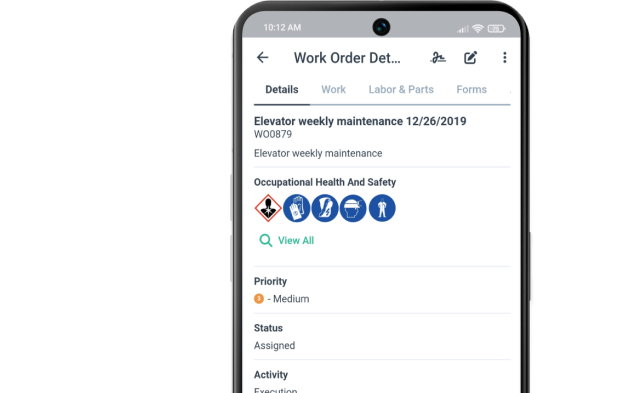
WorkTrek is a CMMS platform designed to simplify maintenance workflows and make it easy for frontline teams to log and manage equipment issues directly from their mobile devices.
A tool like this is critical for enabling TPM, as it allows operators to instantly log inspection results or create a work order the moment they spot an issue.
Source: WorkTrek
This streamlines communication so nothing gets lost, and it gives maintenance teams a clear, prioritized to-do list.
Managers also gain real-time visibility into machine uptime, repair history, and downtime causes, making it that much easier to track OEE and identify chronic losses.
In short, with a CMMS like WorkTrek, you can bring the TPM philosophy to life through a digital platform that helps you plan, execute, and improve every part of your maintenance program.
Conclusion
That wraps up our quick guide to TPM.
We covered everything from the basic definitions and pillars to the real-world benefits, and even how CMMS systems can support your efforts.
Hopefully, you now see how TPM is a well-rounded system for improving your equipment reliability and overall maintenance operations.
If you’re still wondering whether TPM is the right fit for your organization, start simple: train a few operators on one machine and watch the benefits unfold.

Operations & Maintenance
8 Benefits of Conducting a Preventive Maintenance Audit
Key Takeaways:
Organizations implementing preventive maintenance can save 12-18% compared to reactive approaches
Companies prioritizing preventive maintenance achieve a 90% compliance audit pass rate versus 68% for those who don't
Preventive maintenance programs can reduce unplanned equipment downtime by 25-30%
Preventive maintenance audits are the most effective tools maintenance managers have for optimizing operations, reducing costs, and extending equipment lifespan.
Illustration: WorkTrek / Quote: Fiix
Yet many organizations overlook this critical evaluation process, missing opportunities to identify inefficiencies, improve compliance, and strengthen their overall maintenance strategy.
Understanding the benefits of conducting a preventive maintenance audit can transform how you approach equipment maintenance and asset management.
In this comprehensive guide, we'll explore eight compelling benefits that demonstrate why preventive maintenance audits should be a cornerstone of your maintenance program.
Understanding Preventive Maintenance Audits
Let's start with a definition.
A preventive maintenance audit is a systematic evaluation of your preventive maintenance processes, procedures, and outcomes.
This structured assessment reviews maintenance records, equipment performance metrics, work order completion rates, and adherence to established maintenance protocols.
Source: WorkTrek
The primary goal is to assess whether your preventive maintenance program is good at preventing equipment failures, complies with safety regulations, and supports organizational objectives.
According to FieldCircle, a preventive maintenance audit evaluates effectiveness (are PMs actually preventing failures?), efficiency (are we optimizing resources?), and compliance (are we following safety and regulatory maintenance requirements).
Unlike regulatory audits conducted by external agencies, preventive maintenance audits serve as internal tools for continuous improvement.
They help maintenance teams identify gaps between planned and actual maintenance activities, uncover hidden inefficiencies, and benchmark performance against industry best practices.
1. Significant Cost Savings
The financial benefits of conducting preventive maintenance audits are substantial and well-documented across industries.
Organizations that implement structured preventive maintenance programs based on audit findings consistently demonstrate remarkable cost reductions compared to reactive maintenance approaches.
Research from Jones Lang LaSalle reveals that businesses can achieve savings of 12-18% by adopting preventive maintenance over reactive counterparts.
Illustration: WorkTrek / Data: Honeywell
These cost savings come from multiple sources.
Preventive maintenance audits help identify unnecessary maintenance tasks that drain budgets without providing proportional value.
The National Institute of Standards and Technology found that reactive approaches can incur costs 2 to 5 times higher than preventive strategies.
When you conduct regular preventive maintenance audits, you create opportunities to eliminate wasteful spending on over-maintenance while ensuring critical assets receive adequate attention.
UpKeep research demonstrates that every dollar spent on preventive maintenance saves an average of $5 in future repair costs.
Moreover, preventive maintenance audits reduce maintenance costs by optimizing inventory management, preventing costly emergency repairs, and extending equipment lifespan through proper maintenance timing.
Organizations also avoid the substantial indirect costs associated with equipment failures, including lost production time, expedited shipping fees for emergency parts, and overtime labor expenses.
2. Reduced Unplanned Downtime
Equipment downtime represents the most significant operational challenge facing organizations today.
When equipment fails unexpectedly, production stops, deadlines are missed, and costs skyrocket.
Studies show that preventive maintenance programs can reduce unplanned equipment downtime by 25-30%, keeping facilities running smoothly and minimizing disruptions.
Illustration: WorkTrek / Data: Sumitomo Drive Technologies
Preventive maintenance audits identify patterns in equipment failures, revealing which assets require more frequent inspections and which maintenance tasks prevent the most critical failures.
By analyzing maintenance history and equipment performance data during audits, maintenance teams can predict potential failures and schedule corrective maintenance before breakdowns occur.
This staggering figure underscores the financial impact that effective preventive maintenance audits can help organizations avoid.
Regular preventive maintenance audits ensure your preventive maintenance schedule aligns with actual equipment needs rather than arbitrary time intervals.
This optimization prevents both under-maintenance (which leads to failures) and over-maintenance (which wastes resources), striking the right balance to minimize unexpected downtime.
Maintenance teams using insights from preventive maintenance audits can transition from reactive to proactive maintenance, addressing issues during planned maintenance windows rather than responding to emergency breakdowns.
3. Enhanced Equipment Reliability
The one factor that impacts production capacity, product quality, and customer satisfaction is equipment reliability.
When you conduct thorough preventive maintenance audits, you systematically evaluate which maintenance activities most effectively prevent equipment failures and which require adjustment.
Preventive maintenance audits examine maintenance procedures against manufacturer recommendations and industry best practices to ensure your team performs the right preventive maintenance tasks at optimal intervals.
This alignment between maintenance activities and equipment needs significantly improves asset reliability.
Research indicates that routine maintenance and inspections minimize unexpected equipment failures, extend asset life expectancy, and reduce the risk of out-of-hours breakdowns.
Source: WorkTrek
During preventive maintenance audits, maintenance managers review maintenance data to identify recurring equipment issues that standard preventive maintenance might miss.
These insights enable teams to implement targeted corrective maintenance strategies that address root causes rather than symptoms.
By analyzing equipment performance metrics during audits, organizations can establish baseline performance standards and track improvements over time.
4. Improved Regulatory Compliance and Safety
Safety regulations and industry standards impose strict requirements on organizations across virtually all sectors, making compliance a non-negotiable aspect of operations.
Preventive maintenance audits play a crucial role in ensuring adherence to these safety protocols and regulatory requirements.
Source: WorkTrek
According to the Aberdeen Group, businesses that prioritize preventive maintenance achieve a 90% compliance audit pass rate, compared to just 68% for organizations that don't emphasize preventive maintenance.
This significant difference highlights how preventive maintenance audits strengthen compliance postures.
When maintenance teams conduct preventive maintenance audits, they verify that all required safety inspections are performed on schedule, that documentation meets regulatory standards, and that maintenance procedures align with safety regulations.
These comprehensive reviews identify compliance gaps before external regulators discover them, helping organizations avoid hefty fines, legal actions, and potential business shutdowns.
Preventive maintenance audits also enhance workplace safety by ensuring critical safety equipment receives proper attention through the preventive maintenance program.
5. Optimized Maintenance Schedules
One of the most valuable benefits of preventive maintenance audits is the ability to optimize maintenance schedules based on actual equipment performance rather than assumptions.
Many organizations implement preventive maintenance programs based on manufacturer recommendations or industry standards without considering their specific operating conditions, usage patterns, or environmental factors.
Preventive maintenance audits assess whether scheduled maintenance is performed at frequencies that truly prevent failures without creating unnecessary work.
Source: WorkTrek
Fiix Software notes that preventive maintenance scheduled too close together drains budgets while teams perform unnecessary work, whereas scheduling PMs too far apart increases breakdowns and reduces production.
During audits, maintenance managers analyze maintenance history to identify equipment that consistently operates without issues between scheduled preventive maintenance tasks.
This analysis reveals opportunities to extend maintenance intervals for reliable equipment, freeing up maintenance resources for critical assets that require more attention.
Conversely, preventive maintenance audits identify equipment that is failing before scheduled maintenance tasks, indicating the need for more frequent preventive maintenance.
Organizations using computerized maintenance management systems can leverage maintenance data analytics during audits to make evidence-based decisions about optimal maintenance frequencies.
This data-driven approach to preventive maintenance planning ensures that maintenance teams focus their efforts where they deliver the greatest impact on equipment reliability and operational efficiency.
6. Better Resource Allocation
Effective resource management represents a critical challenge for maintenance departments facing budget constraints, staffing limitations, and competing priorities.
Preventive maintenance audits provide the visibility needed to allocate maintenance resources more effectively across people, parts, and time.
When maintenance managers conduct preventive maintenance audits, they identify which preventive maintenance tasks consume disproportionate resources relative to their value in preventing equipment failures.
This analysis reveals opportunities to streamline maintenance procedures, eliminate redundant preventive maintenance activities, and redirect resources toward higher-priority maintenance tasks.
Preventive maintenance audits also evaluate spare parts inventory against actual usage patterns documented in maintenance records and work orders.
Soure: WorkTrek
Organizations frequently discover they're stockpiling parts that rarely see use while experiencing shortages of often-needed components.
These inventory optimization insights reduce carrying costs while ensuring maintenance technicians have the materials they need for preventive maintenance.
Labor allocation also improves significantly through preventive maintenance audits.
By analyzing work order completion times and maintenance activities, managers can better estimate staffing requirements for scheduled maintenance and identify skill gaps requiring training or additional hires.
MaintWiz emphasizes that optimizing the utilization of maintenance resources and materials is essential for controlling costs and maximizing efficiency.
Preventive maintenance audits help organizations optimize their programs by evaluating how resources support them.
The insights gained from regular preventive maintenance audits enable maintenance managers to make strategic decisions about resource investments.
7. Extended Equipment Lifespan
Capital equipment represents substantial organizational investments, making asset longevity a key financial consideration.
Preventive maintenance audits significantly contribute to extending equipment lifespan by ensuring assets receive appropriate care throughout their operational life.
Regular preventive maintenance audits verify that maintenance teams follow manufacturer-recommended maintenance procedures and intervals designed to preserve equipment integrity.
These audits identify instances where deviations from recommended practices might accelerate wear and reduce equipment lifespan.
By analyzing maintenance history during audits, organizations can track equipment degradation patterns and implement preventive measures before minor issues escalate into major failures requiring premature replacement.
Research shows that running equipment to the point of failure can cost up to 10 times as much as regular preventive maintenance would have cost.
Preventive maintenance audits help organizations avoid this costly outcome by ensuring consistent execution of preventive maintenance tasks that prevent catastrophic failures.
Equipment that receives regular, properly executed preventive maintenance operates more efficiently and experiences less stress, directly contributing to longer operational life.
Preventive maintenance audits verify that lubrication, calibration, cleaning, and inspection activities occur as planned, protecting critical assets from premature deterioration.
The cost savings from extended equipment lifespan compound over time, as organizations delay major capital expenditures while maintaining productive capacity.
When preventive maintenance audits reveal opportunities to improve maintenance practices, the resulting changes can add years to equipment service life.
Moreover, well-maintained equipment typically commands higher resale values when organizations eventually upgrade or replace assets, further enhancing the financial benefits of effective preventive maintenance programs.
8. Enhanced Maintenance Performance Monitoring
Continuous improvement requires accurate performance measurement, making enhanced monitoring capabilities a valuable benefit of preventive maintenance audits.
These systematic evaluations establish baseline metrics and track progress toward maintenance excellence over time.
Preventive maintenance audits examine key performance indicators, including preventive maintenance completion rates, mean time between failures, and the ratio of planned to unplanned maintenance.
By regularly measuring these metrics, organizations gain visibility into whether their preventive maintenance program delivers expected results.
When maintenance teams conduct preventive maintenance audits, they compare current performance against historical data to identify trends indicating improvement or decline.
Source: WorkTrek
This trend analysis helps maintenance managers assess whether recent changes to the preventive maintenance strategy have improved equipment reliability and maintenance operations.
Preventive maintenance audits also facilitate benchmarking against industry best practices and standards.
MaintWiz notes that maintenance audits provide opportunities to compare processes, metrics, and performance against industry standards, helping organizations identify areas for improvement and adopt proven strategies.
The documentation and record-keeping requirements of preventive maintenance audits create comprehensive maintenance histories that support data-driven decision-making.
When considering equipment replacement, process improvements, or resource allocation, maintenance managers can reference audit findings to justify recommendations with concrete evidence.
Organizations implementing preventive maintenance software benefit from automated performance tracking, which simplifies audits and provides real-time visibility into maintenance performance.
These systems generate reports showing work order completion rates, maintenance costs, equipment downtime, and other critical metrics that audits evaluate.
By establishing regular preventive maintenance audit schedules, organizations create accountability mechanisms that ensure the preventive maintenance program remains aligned with operational goals and continues to deliver value.
Conclusion
The benefits of conducting preventive maintenance audits extend far beyond simple compliance checks or cost reduction exercises.
It represents a significant opportunity to transform maintenance operations, enhance equipment reliability, and drive continuous improvement across organizations.
From the significant cost savings and reduced downtime to improved compliance, optimized schedules, and better resource allocation, preventive maintenance audits deliver measurable value that directly impacts organizational success.
Modern CMMS platforms like WorkTrek make implementing comprehensive preventive maintenance programs easier than ever, providing the digital infrastructure necessary to support data-driven maintenance strategies.
Source: WorkTrek
Start conducting preventive maintenance audits today to unlock these benefits and transform your maintenance operations from reactive firefighting to proactive asset management.

Operations & Maintenance
How to Conduct a Preventive Maintenance Audit
Key Takeaways
Preventive maintenance audits deliver an average ROI of 545%, with every dollar spent saving five dollars in reduced failures and downtime
Organizations conducting regular preventive maintenance audits reduce equipment breakdowns by up to 90% and extend asset lifespan by 20-40%
A comprehensive audit process involves 7 critical steps, from planning through continuous improvement, typically requiring 2-4 weeks for completion
Modern CMMS platforms can reduce audit time by 50% while improving the accuracy and actionability of findings
Here's the reality: according to recent industry data, unplanned downtime costs Fortune Global 500 companies $1.4 trillion annually—that's 11% of their total revenue disappearing due to equipment failures.
Yet research from McKinsey shows that 70-85% of equipment failures are entirely preventable with proper maintenance practices.
Illustration: WorkTrek / Data: Brightly
What is the bridge between reactive chaos and proactive control? A well-executed preventive maintenance audit.
This comprehensive guide walks you through exactly how to conduct a preventive maintenance audit that transforms your maintenance operations from costly reactive scrambling to profitable proactive management. You'll discover the proven 7-step process, real-world examples from successful implementations, and downloadable tools to get started immediately.
Let's take a detailed look.
What Is a Preventive Maintenance Audit?
A preventive maintenance audit is a comprehensive evaluation of your organization's preventive maintenance program. The goal is to examine everything from maintenance schedules and procedures to equipment performance and team capabilities.
Think of it as a comprehensive health check for your maintenance operations. This is where you can identify gaps, validate successes, and provide a roadmap for continuous improvement.
Unlike routine inspections that focus on individual assets, a preventive maintenance audit examines your entire maintenance ecosystem.
Source: WorkTrek
The audit process scrutinizes your maintenance documentation, assesses compliance with safety regulations, and measures the effectiveness of your current maintenance strategies.
But here's what a preventive maintenance audit isn't: it's not a blame game or a witch hunt.
The most successful audits create an environment of continuous improvement rather than finger-pointing.
They focus on systemic issues rather than individual failures, seeking to understand why maintenance procedures might be skipped or delayed rather than simply documenting non-compliance.
A properly conducted audit answers critical questions about your maintenance program:
Are we performing the right preventive maintenance tasks at the right frequency?
Do our maintenance schedules optimize resource allocation while minimizing downtime?
How effectively are we tracking maintenance history and using that data for improvement?
What equipment failures could we prevent with better maintenance practices?
Where are the gaps between our documented procedures and actual practices?
The ultimate goal? Creating a data-driven foundation for maintenance decisions that reduce costs, improve reliability, and extend equipment life.
When to Conduct a Preventive Maintenance Audit?
Timing is everything in maintenance, and knowing when to conduct your preventive maintenance audit can mean the difference between proactive improvement and reactive scrambling.
Recommended Audit Frequency
There are some basic industry guidelines: conduct comprehensive preventive maintenance audits annually or semi-annually.
Fiix Software's analysis of high-performing maintenance organizations shows that annual audits strike the optimal balance between thoroughness and resource investment for most facilities.
However, your specific frequency should reflect your operations.
Source: WorkTrek
Critical assets operating in harsh environments might warrant quarterly reviews of their preventive maintenance effectiveness.
Facilities with strong CMMS implementation and consistent high performance might extend to 18-month cycles.
Triggering Events That Demand Immediate Audits
Sometimes you can't wait for the scheduled audit. These situations call for immediate evaluation:
After Major Equipment Failures
When critical assets fail despite preventive maintenance, it signals potential systemic issues. A focused audit can identify whether the failure resulted from inadequate maintenance schedules, improper procedures, or execution gaps.
Following Safety Incidents
Any maintenance-related injury or near-miss should trigger an audit of relevant procedures and practices. This isn't about blame—it's about preventing recurrence.
Source: WorkTrek
During Performance Degradation
When key performance indicators trend downward—rising maintenance costs, increasing equipment downtime, declining schedule compliance—an audit can diagnose root causes before they become critical.
Before Major Capital Investments
Planning significant equipment purchases or upgrades? An audit ensures your maintenance program can properly support new assets from day one.
After Organizational Changes
New leadership, reorganizations, or significant staff turnover can disrupt established maintenance practices. Audits help identify and address gaps before they impact operations.
The 7-Step Process for Conducting a Preventive Maintenance Audit
Now, let's get into how actually to conduct your audit.
Step 1: Define Scope and Objectives
Stars with crystal-clear objectives and boundaries.
Begin by answering fundamental questions:
What specific aspects of your preventive maintenance program need evaluation?
Are you focusing on a particular department, equipment category, or facility?
What outcomes do you need—cost reduction, reliability improvement, compliance verification, or all of the above?
Your scope definition should specify:
Physical boundaries: Which facilities, departments, or production lines are included
Asset categories: All equipment, critical assets only, or specific types
Program elements: Maintenance schedules, procedures, documentation, training, or comprehensive evaluation
Time frame: Historical data period to review (typically 6-12 months)
Success criteria: Specific, measurable outcomes you'll use to evaluate success
Don't try to boil the ocean. A focused audit of critical assets often delivers more value than a surface-level review of everything.
Illustration: WorkTrek / Data: Mooncamp
As one maintenance manager at a chemical processing plant told us, "Our first audit tried to cover everything and accomplished nothing. The second audit focused on our top 20% of critical equipment and transformed our entire operation."
Create an audit charter document that all stakeholders sign off on. This prevents scope creep and ensures everyone understands what's being evaluated and why. Include estimated timelines, resource requirements, and communication protocols.
Pro tip: Involve your maintenance personnel from day one. They know where the bodies are buried, and their buy-in is essential for implementing improvements.
Frame the audit as an opportunity to finally fix those persistent problems they've been complaining about for years.
Step 2: Assemble Your Audit Team
The makeup of your audit team can make or break your preventive maintenance audit.
You need a balanced mix of perspectives: maintenance expertise, operational knowledge, and fresh eyes. The ideal team includes:
Internal Team Members:
Lead auditor with maintenance management experience
Senior maintenance technician who knows equipment intimately
Operations representative who understands production requirements
Safety specialist familiar with regulatory requirements
CMMS administrator or data analyst for information gathering
External Perspective:
Consider including an external auditor or consultant, especially for your first comprehensive audit. They bring industry best practices, objective assessment, and comparative benchmarking that internal teams might miss.
Define clear roles and responsibilities.
Who conducts equipment inspections?
Who reviews maintenance documentation?
Who interviews maintenance personnel?
Clear accountability prevents important areas from falling through cracks.
Schedule a kickoff meeting for the audit team to review objectives, methodology, and timeline. Define and establish communication protocols.
Those include how often the team will meet, how findings will be documented, and who needs to be informed of critical discoveries.
Remember: your audit team members still have day jobs. Plan for realistic time commitments and consider backfill support for critical roles.
Nothing derails an audit faster than team members getting pulled away for emergency repairs.
Step 3: Conduct Pre-Audit Data Collection
Start a full data collection before anyone sets foot on the shop floor. This lays the groundwork for the audit.
Start with your maintenance documentation.
A computerized maintenance management system like WorkTrek makes this exponentially easier. CMMS users complete maintenance audits 50% faster than those relying on paper records. Pull together:
Maintenance History and Records:
Work order completion rates for the past 6-12 months
Preventive maintenance schedule compliance data
Equipment failure reports and root cause analyses
Maintenance costs are broken down by labor, parts, and contractors
Downtime logs with duration and impact
Source: WorkTrek
Current Maintenance Procedures:
Preventive maintenance task lists for all included equipment
Standard operating procedures for maintenance activities
Safety protocols and lockout/tagout procedures
Training records and certification documentation
Vendor recommendations and equipment manuals
Performance Metrics:
Key performance indicators trends (MTBF, MTTR, OEE)
Budget vs. actual maintenance expenses
Planned vs. unplanned maintenance ratios
Inventory turnover and stockout incidents
Schedule compliance percentages
Don't just collect data but focus on analyzing it for patterns. Here a few questions to ask:
Are certain equipment types failing more frequently?
Do maintenance schedules show consistent delays during specific periods?
Are there gaps between documented procedures and work order descriptions?
Create data visualization dashboards that highlight trends and anomalies. Heat maps showing equipment reliability, Pareto charts of failure modes, and trend lines of maintenance costs help identify focus areas for the physical audit phase.
One pharmaceutical manufacturer discovered through pre-audit analysis that 60% of their "preventive" maintenance was actually corrective work that had been miscategorized.
This insight completely changed their audit approach and led to a fundamental restructuring of their maintenance workflows.
Step 4: Review Maintenance Documentation
Documentation review is the backbone of your preventive maintenance audit. This helps reveal gaps between intended and actual practices.
Start with preventive maintenance schedules. Compare them against manufacturer recommendations, industry standards, and equipment criticality. A few questions to ask include:
Are you over-maintaining non-critical assets while under-maintaining critical equipment? McKinsey's analysis shows that up to 30% of preventive maintenance tasks add no value.
Examine maintenance procedures for completeness and clarity. Can a competent technician follow them without confusion? Do they include:
Specific tool and part requirements
Safety precautions and PPE requirements
Step-by-step instructions with acceptance criteria
Troubleshooting guidance for common issues
Documentation requirements and sign-offs
Source: WorkTrek
Check maintenance records for accuracy and completeness.
Consistent data entry formats
Complete failure descriptions with root causes
Accurate labor and parts tracking
Proper coding of work types (preventive, predictive, corrective)
Timely entry of information
Evaluate your maintenance data management.
How easily can you retrieve specific maintenance history?
Can you quickly identify recurring problems?
Are maintenance logs providing valuable insights or just consuming file space?
Review training documentation to ensure maintenance personnel have the skills needed for assigned tasks. Industry data shows that inadequately trained maintenance staff increase equipment failure rates by up to 50%.
Don't forget to assess compliance documentation. With safety regulations and industry standards constantly evolving, your audit should verify that maintenance practices align with current requirements. This is particularly critical for industries with strict regulatory oversight like pharmaceuticals, food processing, and aerospace.
Step 5: Execute Physical Equipment Inspections
Now comes the moment of truth: Compare documentation with reality through hands-on equipment inspections.
Physical inspections reveal what paperwork can't: the actual condition of equipment, the reality of maintenance practices, and the effectiveness of preventive maintenance tasks.
This isn't a white-glove inspection looking for dust; it's a systematic evaluation of whether your preventive maintenance program actually prevents failures.
Start with critical assets and use a structured inspection checklist that examines:
Equipment Condition Indicators:
Unusual noises, vibrations, or temperatures
Visible wear, corrosion, or damage
Fluid leaks or contamination
Alignment and balance issues
Proper lubrication levels and conditions
Illustration: WorkTrek / Data: inFlow Blog
Maintenance Execution Evidence:
Completion tags and inspection stickers
Lubrication charts and routes
Predictive maintenance data collection points
Spare parts availability and organization
Tool availability and condition
Evaluate and watch maintenance personnel perform routine preventive maintenance tasks. Some things to look for include:
Are they following documented procedures?
Do they have the right tools?
Are they taking shortcuts that might compromise effectiveness?
For a structured way to assess and optimize your process, use this maintenance audit checklist.
Source: WorkTrek
Document everything with photos and detailed notes. Modern maintenance audit apps allow real-time documentation with automatic timestamp and location data. This creates an indisputable record and helps communicate findings to stakeholders who weren't present during inspections.
Pay special attention to equipment with high failure rates or excessive maintenance costs identified during data analysis.
Often, physical inspection reveals root causes that maintenance records miss—inadequate ventilation causing overheating, contamination from nearby processes, or operator abuse between maintenance intervals.
Step 6: Analyze Findings and Identify Gaps
With data collected and inspections complete, it's time to transform raw information into actionable insights.
Practical analysis identifies not just what's wrong, but why it isn't good and what impact it has on maintenance operations.
Focus on categorizing and prioritizing findings:
Gap Classification Framework: Learn more about Computerized Maintenance Management Systems (CMMS) like WorkTrek and how they support effective maintenance strategies.
Critical: Safety hazards, regulatory non-compliance, or issues affecting critical asset reliability
Major: Significant impact on maintenance costs, equipment performance, or schedule compliance
Minor: Opportunities for improvement with limited operational impact
Observational: Best practice suggestions or emerging trends to monitor
Create a findings matrix that maps each gap to:
Root cause (systemic issue vs. isolated incident)
Affected assets or processes
Current impact (downtime, costs, safety risk)
Potential consequences if unaddressed
Estimated effort to resolve
Look for patterns across findings. Multiple equipment inspections revealing inadequate lubrication might indicate training gaps, unclear procedures, or resource constraints. Document version control issues across several procedures could signal a broken management of change process.
Benchmark against industry standards.
How does your 70% preventive maintenance schedule compliance compare to the 90% achieved by world-class performers?
Are your maintenance costs at 5% of the replacement asset value in line with the 2-3% best-practice target?
These comparisons help prioritize improvement efforts.
Don't just focus on problems. Document what's working well since these successes can be replicated across other areas.
Step 7: Develop Action Plans and Recommendations
The rubber meets the road when you transform audit findings into concrete action plans that drive measurable improvements.
Your recommendations should be specific, actionable, and achievable. Vague suggestions like "improve maintenance practices" waste everyone's time. Instead, provide detailed roadmaps:
Structure each recommendation with:
Clear problem statement with supporting data
Specific actions required
Responsible parties and timelines
Resource requirements (budget, personnel, tools)
Success metrics and measurement methods
Risk assessment if not implemented
Prioritize recommendations using a value-effort matrix.
Quick wins
High-value improvements requiring minimal effort should be implemented immediately to build momentum. These might include updating critical equipment maintenance schedules, implementing missing safety procedures, or establishing basic performance metrics.
Medium-term
This typically requires more planning or resources. Examples include maintenance training programs, CMMS implementation or optimization, or preventive maintenance schedule overhauls. These initiatives might take 3-6 months but deliver substantial returns.
Long-term
Using strategic recommendations to address systemic issues. Transition to reliability-centered maintenance, implementing predictive technologies, or restructuring maintenance organizations requires significant investment but can transform maintenance performance.
Create detailed implementation plans for each recommendation:
Example: Improving Preventive Maintenance Schedule Compliance
Week 1-2: Analyze root causes of missed PM tasks (resource constraints, unclear priorities, access issues)
Week 3-4: Redesign PM scheduling to balance workload and production requirements
Week 5-6: Train maintenance personnel and planners on new scheduling process
Week 7-8: Pilot new schedule with critical equipment
Week 9-12: Roll out across all equipment with daily compliance monitoring
Success metric: Achieve 85% PM compliance within 90 days
Include cost-benefit analysis for significant investments. If implementing a CMMS will cost $50,000 but reduce maintenance costs by $15,000 monthly through better planning and inventory management, that 3-month payback period makes approval easier.
Post-Audit: Implementation and Continuous Improvement
The audit report is the starting gun for transformation.
Creating an Implementation Roadmap
Transform your recommendations into a phased implementation plan that maintains momentum while avoiding change fatigue.
Start with a 30-60-90-day quick-win plan.
Focus on immediately actionable improvements that demonstrate the audit's value. These might include:
Updating critical maintenance schedules based on failure history
Implementing missing safety procedures
Establishing daily maintenance KPI tracking
Organizing maintenance supplies and tools
Establish governance structures for longer-term initiatives. Create a maintenance improvement committee that meets weekly initially, then monthly as initiatives mature. Include representatives from maintenance, operations, safety, and finance to ensure balanced decision-making.
Tracking Progress and Measuring Success
You can't manage what you don't measure. Establish baseline metrics before implementing changes, then track progress religiously.
Essential metrics to monitor include:
Schedule compliance: Target 90% for critical equipment
Planned maintenance percentage: Aim for 80% planned, 20% unplanned
Mean Time Between Failures (MTBF): Should increase by 20-30% within 6 months
Maintenance cost per unit produced: Should decrease by 10-15% annually
Safety incidents: Zero tolerance for preventive maintenance-related injuries
Addressing Resistance to Change
Let's be honest: change is hard, and maintenance teams can be particularly resistant after years of "we've always done it this way."
Address resistance head-on through:
Communication: Explain why changes are necessary using audit data. When technicians understand that improved PM schedules will reduce middle-of-the-night emergency calls, buy-in increases.
Involvement: Include front-line maintenance personnel in improvement planning. They often have the best solutions but rarely get asked.
Training: Invest in skills development. According to Plant Engineering surveys, 29% of maintenance technicians feel unprepared for modern maintenance requirements. Comprehensive training programs address both competence and confidence.
Recognition: Celebrate successes publicly. When PM compliance improves or equipment reliability increases, acknowledge the team's efforts.
Patience: Cultural change takes time. Industry research suggests that new maintenance practices take 18-24 months to become fully embedded.
How CMMS Software Transforms Preventive Maintenance Audits
The difference between auditing with and without a computerized maintenance management system is like comparing GPS navigation to wandering with a paper map.
Modern CMMS platforms don't just make audits easier; they make them exponentially more valuable.
Data Accessibility and Accuracy
The foundation of any effective preventive maintenance audit is data, and CMMS software serves as your single source of truth.
Instead of hunting through file cabinets and spreadsheets, auditors can instantly access:
Complete maintenance history for every asset
Real-time schedule compliance metrics
Detailed cost breakdowns by equipment, department, or work type
Failure patterns and root cause analysis
Inventory levels and parts consumption trends
WorkTrek's analytics dashboard, for example, provides instant visibility into maintenance performance metrics that would take weeks to compile manually.
Source: WorkTrek
You can identify equipment with declining reliability, maintenance tasks consistently running over schedule, or technicians requiring additional training. This can all happen within minutes rather than days.
The accuracy improvement is equally dramatic. Manual data entry errors, which studies show affect up to 26% of paper-based maintenance records, virtually disappear with CMMS automation.
Barcode scanning, mobile data entry, and automated workflows ensure information is captured correctly the first time.
Streamlined Audit Execution
A CMMS transforms the audit process from a disruptive special project into an integrated operational review.
Audit checklists can be built directly into the system, with automatic scoring and compilation of findings.
As auditors complete inspections, results flow immediately into corrective action workflows. No more transcribing notes or losing critical observations in paperwork shuffles.
Predictive analytics within modern CMMS platforms can even pre-identify audit focus areas. By analyzing failure patterns, maintenance costs, and compliance trends, the system highlights potential gaps before auditors begin their review. This targeted approach ensures that limited audit resources focus on the highest-impact opportunities.
Continuous Improvement Through Automated Monitoring
Here's where CMMS software truly shines: transforming periodic audits into continuous improvement engines.
Instead of waiting 12 months to discover issues with the preventive maintenance schedule, CMMS platforms provide real-time alerts when compliance drops below targets. Maintenance managers can address problems immediately rather than letting them compound into audit findings.
Automated reporting eliminates the "audit scramble" where teams frantically compile documentation before reviews.
Consider how WorkTrek's preventive maintenance module handles this:
Automatic schedule generation based on manufacturer recommendations and operational constraints
Real-time compliance tracking with drill-down capability to understand missed tasks
Predictive alerts when maintenance tasks are likely to be delayed, and integrated corrective action management to address gaps.
These features ensure your maintenance program continuously improves between formal audits.
ROI Justification Through Clear Metrics
Perhaps most importantly, CMMS software quantifies the value of your preventive maintenance program and audit improvements.
Source: WorkTrek
According to the 2024 MaintainX State of Industrial Maintenance Report:
Organizations using CMMS reduce unplanned downtime by 32%
Work order completion rates increase by 53%
Maintenance teams save 250 hours annually through improved efficiency
59% reduce costs through better parts inventory management
The ability to model "what-if" scenarios adds another dimension. What would happen if we increased PM frequency on critical assets? How much could we save by optimizing maintenance routes? CMMS simulation capabilities let you test improvements virtually before committing resources.
Conclusion: Your Path to Maintenance Excellence
The evidence is overwhelming: preventive maintenance audits transform maintenance operations from costly necessities into competitive advantages.
We've covered the complete journey: from understanding what preventive maintenance audits are and why they matter, through the detailed 7-step process for conducting them, to real-world examples of their transformative power.
Remember, perfection isn't the goal; focus on progress.
Start today. Your future self—and your equipment—will thank you.

Operations & Maintenance
What Is Grounds Maintenance?
Key Takeaways:
Commercial building maintenance costs range from $10 to $25 per square foot annually.
72% of business leaders cite rising litigation as a growing threat in their industries.
Well-maintained landscapes boost reputation and can even attract new customers.
Did you know that one retail destination in Illinois managed to cut its annual maintenance costs by 20% simply through proactive grounds maintenance?
Yes, how we care for our outdoor spaces has a significant impact on our business’s profitability, operational efficiency, and reputation.
It not only minimizes risks but also improves visual appeal and can even attract new customers.
That’s why, in this article, we’ll cover everything you need to know about grounds maintenance, from why it matters to some of its best practices.
Let’s get started.
Grounds Maintenance: The Definition
Grounds maintenance covers a wide range of tasks designed to preserve and improve outdoor spaces, ensuring they stay safe, functional, and visually appealing year-round.
These tasks can range from straightforward activities such as grass cutting and hedge trimming to more complex work like managing drainage systems.
Here’s a list of some of the most common grounds maintenance activities:
Source: WorkTrek
This type of ukpeep is vital across many industries, sectors, and business types.
Any organization with outdoor areas, even something as simple as a walkway or car park, requires regular, high-quality outdoor maintenance.
These are just a few sectors where it makes a real difference:
Facilities managementKeeping large estates and commercial properties looking their bestRailClearing tracksides of debris and overgrowth to ensure safety and visibilityOffice & industrialMaintaining tidy, professional environments around business parks and industrial sitesRetailEnsuring car parks, walkways, and outdoor areas are clean and welcoming for customersEducationCreating attractive, safe spaces for students and staff on school and university groundsPublic sectorSupporting local authorities in maintaining parks, pathways, and civic spaces for everyone to enjoy
Regardless of the industry, effective grounds maintenance is vital for creating a safe, attractive, and welcoming environment for visitors, employees, and the community.
Well-kept grounds send the right message: they show you care about quality and first impressions.
Why Grounds Maintenance Matters
Now, let’s explore some specific benefits of effective grounds maintenance.
Reduces Long-Term Costs
The best way for a business to save money is to prevent costly problems before they happen.
That’s exactly what grounds maintenance does.
Seasonal cleanups, pruning, lawn aeration, and irrigation checks all help catch potential issues early, avoiding expensive repairs down the road and saving significant money
According to the landscaping company Boston Landscape Co., commercial building maintenance is one of the largest ongoing expenses for property owners and managers.
It typically ranges from $10 to $25 per square foot annually, depending on location, building type, and service level.
To avoid adding to these already substantial costs, proactive maintenance is key, says Steve Schumacher, Owner of Boston Landscape Co.:
Illustration: WorkTrek / Quote: Boston Landscape Co.
A great example of this in action is Shorewood Crossing, a retail destination in Shorewood, Illinois.
To keep their property appealing to tenants, shoppers, and the local community, they started focusing on proactive retail landscaping and saw real financial benefits almost immediately.
By monitoring plants for diseases, installing annual and biannual mulching, and replacing an outdated irrigation system that was wasting water, they achieved amazing results.
According to Vince Sammartano, Business Development at KD Landscape, the company responsible for the maintenance, Shorewood Crossing experienced:
Improved tenant satisfaction
30% reduction in water usage
20% lower annual maintenance costs
Over 40% fewer reactive service requests
The takeaway is clear: proper grounds maintenance delivers measurable savings and long-term value.
Be proactive, plan strategically, prioritize quality, and the results will speak for themselves.
Improves Safety
Grounds maintenance doesn’t just save you money.
It can also save you from legal trouble and costly fines by ensuring your outdoor spaces are safe and accessible.
For instance, it prevents hazards such as slips, trips, and falls caused by potholes, uneven surfaces, and debris.
Similarly, it addresses overgrown vegetation and pests, which also introduces all kinds of risk.
In short, grounds maintenance keeps your property safe and compliant, which seems to be more important than ever.
According to the 2025 Sentry survey, most business leaders cite rising litigation and multimillion-dollar verdicts as a growing threat in their industries.
Illustration: WorkTrek / Data: Sentry
In other words, people don’t shy away from taking organizations to court nowadays, and companies that fail to prioritize safety face increased exposure to costly verdicts.
Grounds maintenance serves as a critical line of defense against such risk.
Take it from The University of New Mexico.
Their campus planners use architecture, landscaping, and urban design to create safe and secure, yet attractive, spaces.
For instance, they avoid overgrown shrubs, dense trees, or hidden areas as they can attract unwanted activity.
Rosie Dudley, their Director of Campus Capital and Space Planning, explains:
Illustration: WorkTrek / Quote: UNM News
Native landscaping further balances safety, sustainability, and aesthetics.
Dudley notes:
“UNM is using more native plants that are visually permeable, reducing hiding spots while supporting sustainability goals.”
These seemingly small details can have a major impact on overall safety.
Grounds maintenance experts understand these nuances and know how to optimize outdoor spaces to keep them safe without compromising visual appeal.
Increases Curb Appeal
Visual appeal matters.
Clean, attractive, and well-maintained landscapes signal quality and attention to detail, creating strong first impressions for visitors, clients, or potential buyers and tenants alike.
This can unlock a range of benefits.
For example, if you’re trying to sell a property, a well-kept exterior can significantly boost your resale value.
Debbie Mathews, an interior designer in Nashville, Tennessee, explains:
Illustration: WorkTrek / Quote: Southern Living
While Mathews is referring to residential properties here, the same applies to commercial spaces.
Buyers and tenants want to feel confident that a property has been well cared for, with healthy and robust planting.
Even if selling isn’t your goal, improved curb appeal can still deliver major benefits by signaling professionalism, quality, and sometimes even attracting new customers.
Businesses in Milton Keynes, England, know this well.
With commercial property values on the rise, many have increased investment in professional grounds maintenance services, and the results are clear.
Mark Ellis, Regional Commercial Director at Morgan Sindall Property Services, notes:
Illustration: WorkTrek / Quote: Milton Keynes
He adds that the condition of a property’s exterior is often a client’s first impression.
A neat, well-kept space isn’t just pleasant to look at. It tells people you care about details, safety, and quality.
Grounds Maintenance Best Practices
Want to unlock these benefits for your business?
Follow these best practices.
Develop a Regular Maintenance Schedule
Creating a structured, consistent plan for all groundskeeping tasks is a must.
It ensures everything gets completed on time, efficiently, and safely, preventing minor issues from becoming major problems.
We already know that preventive maintenance works, but it doesn’t happen on its own.
It must be carefully scheduled, assigned, and tracked to ensure proper execution without disrupting operations.
Using maintenance software is the most efficient way to handle this.
Such solutions automate repetitive, labor-intensive tasks, streamlining operations and reducing errors.
In fact, according to the 2025 Aspire survey, most landscape businesses are already leveraging technology to modernize their operations and elevate the customer experience.
Illustration: WorkTrek / Data: Aspire
One digital tool worth mentioning is a CMMS, like our own WorkTrek.
Think of a CMMS as your team’s central command center: a place to plan, track, and manage every maintenance activity, team member, and resource.
For example, WorkTrek makes it very easy to schedule repeating tasks.
First, it gives you an overview of everything that’s happening within your operations, enabling you to quickly find available workers and select the best time slot for the task.
Source: WorkTrek
Then, whether it’s mowing every Tuesday, weekly irrigation checks, or seasonal fertilization, you can set up a recurring work order in seconds.
Our work orders come with customizable required fields, ensuring all necessary details, like assignees, location, necessary tools, costs, and more, are all captured consistently.
This significantly reduces miscommunication, errors, and rework.
Additionally, we offer automated alerts that ensure important maintenance deadlines are never overlooked.
Overall, WorkTrek increases efficiency and accountability across your maintenance team.
Everyone can see what has been done, what is in progress, what needs attention, and who is responsible.
With this kind of visibility, scheduling future activities becomes much more strategic and effective.
Keep Detailed Records
It’s also important to document all maintenance activities, including work performed, materials used, inspections, and any issues observed.
Accurate records further increase accountability and transparency, which are critical for audits, client reporting, and future planning.
Shane Richards, Landscape Operations and Maintenance Manager at Utah State University, is all for this approach:
Illustration: WorkTrek / Quote: Facilities Net
According to Richards, data is what convinces everyone and aligns the team on decisions, such as purchasing new equipment.
It also highlights both strengths and weaknesses in operations, allowing areas that need improvement to be addressed promptly.
As he notes:
“A man without numbers is just another man with an opinion.”
Keeping accurate records transforms opinions into objective, actionable data: data that no inspector, manager, or staff member can dispute.
So, ensure you pay as much attention to record-keeping as you do to scheduling.
Using standardized templates helps.
They ensure that all records follow a consistent format, making it easier for staff to input information correctly and for managers to locate what they need quickly.
Source: WorkTrek
They function like checklists, reducing the odds of important details, such as dates, equipment used, chemicals applied, or tasks completed, being overlooked.
In short, standardized templates turn messy, inconsistent notes into structured, reliable records, which are vital for efficiency, safety, and long-term planning in grounds maintenance.
Use Sustainable Landscaping Practices
It’s best to design and maintain grounds in ways that conserve resources, minimize environmental impact, and support ecosystem health.
Often called eco-friendly or green maintenance, this approach reduces water, fertilizer, and pesticide use, saving money while protecting local ecosystems.
It can even boost your business’s reputation and attract new customers, says Kristy Boase from MIL-SPEC Landscaping:
Illustration: WorkTrek / Quote: Jobber
Indeed, more and more consumers want companies to align with their values, and grounds maintenance can be a surprising yet effective way to do so.
The best part is that there’s no one-size-fits-all approach. You can experiment and find a strategy that works for you.
For instance, Whitman College has been removing imported, invasive species from its property and replacing them with native plants.
Senior Rachel Kennedy, founding member and current president of the Native Plant Restoration Coalition (NPRC), explains:
“[Native plants] help to improve the biodiversity of an area.”
Moreover, Whitman arborist Kirk Huffey has encouraged the groundskeeping crew to reduce herbicide use.
He has been exploring less harmful alternatives, noting:
Illustration: WorkTrek / Quote: Whitman Wire
These are just a few examples of sustainable practices you can try.
You might also implement smart irrigation systems to reduce water waste or nourish soil with organic matter through composting and mulching.
Recycling items such as pots, trays, and wood instead of purchasing new ones is another effective way to practice green maintenance.
Ultimately, no matter which path you take, green maintenance pays off.
Your business wins, the community wins, and the environment wins.
Conclusion
A well-maintained outdoor space says a lot about those who maintain it: that they care, that they plan, and that they’re building something meant to last.
And this care shown outside your walls ultimately signals the standards you uphold inside them.
When grounds maintenance is proactive, organized, and consistent, it shows professionalism, supports safety, and strengthens reputation.
In other words, in a world where first impressions matter more than ever, attention to your surroundings is a strategy definitely worth exploring.

Operations & Maintenance
What Are the Advantages of Maintenance Record-Keeping?
Key Takeaways:
OSHA increased its penalties, raising the maximum fine from $16,131 to $16,550.
A U.S. beverage packaging firm saved $1 million on spare parts by digitizing its records.
Plants allocate between 5% and 20% of their annual operating budget to maintenance.
Maintenance record-keeping. Not the most exciting part of the job, right?
But by optimizing this one process, you could save thousands, even hundreds of thousands of dollars, all while improving operational efficiency and productivity.
That’s right. Your upkeep records hold that kind of power.
Want to know more?
Keep reading to discover all the benefits of effective maintenance record-keeping.
Streamlined Maintenance Planning
By keeping detailed records of past maintenance, including dates, service types, parts replaced, and recurring issues, you can schedule future maintenance more efficiently.
More specifically, you can allocate maintenance staff and resources more strategically, avoiding over- or undermaintaining your valuable assets.
This ultimately boosts operational efficiency and reduces that costly unplanned downtime.
The planning process is even smoother with a CMMS solution, which stores all documentation in one digital location and automatically updates information.
Take our own CMMS solution, WorkTrek, for example.
It lets you easily view all past, present, and upcoming tasks, work orders, and requests, along with their relevant details.
You can quickly check who the contractors and supervisors were, how much each job cost, how long it took, what the issue was, where it occurred, and even view photos of the problem.
Source: WorkTrek
These records can also be updated in real time by the responsible personnel through our mobile app.
Over time, these detailed documents help you create a complete overview of your upkeep activities, assets, and recurring issues, making it easier to plan future work and identify problem areas.
Take it from Matjaž Valenčič, Operations & Maintenance Manager at interEnergo, an international Ljubljana-based energy company.
Thanks to WorkTrek’s efficient record-keeping, they were able to eliminate inefficiencies in their information management processes and gained full control over their operations.
Valenčič explains:
“Before using WorkTrek, we had most of the data on assets in Excel and various documents and had to rely on people to carry out timely service, which sometimes resulted in mistakes, power plant shutdowns, loss of profit, and safety risks.”
With WorkTrek, such issues are a thing of the past.
It keeps your records accurate, complete, and up to date, giving you full visibility into your operations and enabling strategic planning for maximum efficiency and cost-effectiveness.
Increased Workplace Safety
Maintenance records don’t just track repair histories.
They can also include step-by-step instructions, LOTO procedures, and PPE or safety reminders for each asset or task, all of which play a major role in keeping operations safe.
Digitized records make it even easier.
Supervisors can typically attach safety instructions directly to work orders, ensuring technicians always have the correct procedures right in front of them:
Source: WorkTrek
So, instead of digging through piles of paperwork and binders to find the right information, they can access everything instantly on their phone or desktop.
And when workers have all the relevant information right in front of them, they’re far more likely to follow the necessary steps correctly.
That means fewer mistakes, fewer shortcuts, and fewer accidents and injuries.
In short, with accurate and accessible record-keeping, you’ll finally stop hearing excuses like “I didn’t know.”
Kristen Panella, founder of 2SAFE Consulting, a firm specializing in safety training and industrial hygiene testing, explains that this very lack of knowledge is often what leads to accidents.
In fact, he has witnessed it firsthand during his many years of work as a safety consultant:
“Let's say an electrician is working at a facility [...] There's often no set SOP for that individual to follow that would give him the knowledge: 'I'm supposed to do this. I'm supposed to shut it off and lock it out and then work in there.'”
That’s where serious, sometimes life-threatening, problems occur.
However, when you record these instructions and make them easy to find, you transform how your team works.
Safety stops being an afterthought and becomes second nature. Everyone knows what to do and how to do it efficiently and safely.
Reliable Compliance Assurance
For many industries, maintenance records aren’t optional.
Regulations from agencies such as OSHA, ISO standards, and environmental authorities require proof that inspections and repairs are conducted in accordance with established standards.
Daren Hansen, Sr. Editor of Transportation Safety at J. J. Keller & Associates, Inc., a consulting firm for the transportation industry, sums it up well:
Illustration: WorkTrek / Quote: J.J. Keller
That’s right. Ensuring compliance is only half the job.
You must also be able to prove it, which is where your maintenance records come in.
When records are complete, organized, accurate, and up to date, audits and inspections run more smoothly, protecting your organization from serious consequences.
The most common risks include legal action and fines, but they are only part of the story.
Paul Bullard, Product Director at SFG20, a building maintenance software solution, explains:
Illustration: WorkTrek / Quote: Facilities Management Journal
In other words, a lot is at stake. And that’s not changing anytime soon.
In fact, the consequences may only grow more severe.
For example, OSHA recently increased its penalties for 2025, raising the maximum fine for serious violations from $16,131 to $16,550.
With effective record-keeping, though, you don’t need to worry about unpleasant surprises like these.
Your records serve as clear, timestamped evidence that everything’s up to standard.
Even if something’s not, they’ll help you spot it long before an inspector does, giving you the chance to fix it fast and stay in control.
Improved Employee Accountability
Upkeep records provide a clear, trackable history of who performed which tasks.
This makes it easier to evaluate performance, assign responsibility, and ensure transparency.
And transparency encourages employees to perform tasks carefully and on time, minimizing errors and oversight.
Many digital maintenance management systems also track who used specific equipment, when, and where, prompting workers to handle company assets more responsibly.
Glenn Talbot, Managing Director at Verified, a QR code-based solution that provides actionable data and insights for visitor, contractor, and safety management, elaborates:
Illustration: WorkTrek / Quote: LinkedIn
The bottom line is this: transparency through diligent record-keeping directly translates into higher employee accountability.
Take the Dallas Zoo, for example.
Before implementing effective document management, they had little visibility into what work was done and by whom.
Sheilah Spencir, the zoo’s Office Assistant, recalls:
“Maintenance was tracked on individual handwritten work requests. Often they would get lost [...]. Assets were tracked on a spreadsheet by several individuals with varying amounts of information. Labor hours were not tracked or recorded.”
Once they went digital, everything changed.
They could now track each operator and technician’s performance in great detail.
Spencir noted:
Illustration: WorkTrek / Quote: MicroMain
This capability allowed them to identify inefficiencies early, make timely corrections, and boost overall worker productivity.
Optimized Inventory Management
By carefully tracking parts usage, replacement schedules, and recurring issues, you can better predict which spare parts are needed and when.
Here’s what that might look like with a dedicated maintenance management solution:
Source: WorkTrek
This reduces excess inventory and associated costs while ensuring critical components are always on hand.
In other words, no more overstocking or understocking, all thanks to efficient record-keeping.
Nobody understands this better than Crown Cork & Seal, a U.S. beverage packaging company.
They saved $1 million on spare parts by digitizing their records.
Operating 16 beverage packaging facilities across the country, their inventory was previously unstandardized, and monitoring non-local sites was cumbersome.
Part requests involved lengthy phone calls and time-consuming searches through separate storerooms.
Everything was siloed.
However, with a digital system, all inventory data became centralized.
Technicians could easily search the records to locate and share parts stored at any location.
This eliminated the need for each plant to maintain a complete inventory, helping Crown avoid purchasing duplicate parts and saving $1 million over a few years.
Illustration: WorkTrek / Data: eMaint
The lesson here is clear: you don’t know what you don’t know.
Without proper tracking, you may be buying multiple parts and tools unnecessarily, overspending, and hurting your company’s profitability.
But with meticulous record-keeping, you gain transparency.
And with transparency comes more control and cost savings.
Simplified Warranty Claim Processing
Maintenance records provide all the information you need for successful warranty claim processing.
This includes:
Proof of purchase
The warranty document itself
Details of the issue encountered
Equipment details, such as model and serial number
All operating, installation, and maintenance procedures required to keep the warranty valid
By carefully recording, organizing, and making these details easily retrievable, you increase the likelihood of successful warranty claims and reduce out-of-pocket repair costs.
After all, why spend more on maintenance than necessary? Maintenance is already costly.
For example, recent research shows that 64.4% of plants allocate 5%-20% of their annual operating budget to maintenance, while nearly 20% of facilities allocate over 20% of their budget to it.
Illustration: WorkTrek / Data: MaintainX
Taking full advantage of warranties can help offset these costs, but only if you properly document everything.
Consider, for instance, Caterpillar’s warranties, which clearly state that the user is responsible for:
“Performance of all required maintenance and inspections at scheduled intervals per Caterpillar specifications.”
They also note that the company is not responsible for:
“Failures resulting from abuse, neglect, and/or improper storage or repair.”
How do you prove compliance? Only through diligent record-keeping.
Without detailed records, even valid claims can be denied, costing you time and money.
Increased Equipment Resale Value
A detailed maintenance history shows prospective buyers that the equipment you’re selling has been well cared for, building trust and confidence.
After all, when it comes to selling heavy equipment, buyers want one thing above all else: proof that the machine has been properly maintained.
Maintenance records provide exactly that, giving buyers a clear view of the equipment’s history, current condition, and future reliability potential.
According to the 2025 EquipmentWatch survey, interest in used equipment is growing, particularly in the construction industry.
Illustration: WorkTrek / Data: EquipmentWatch
This comes as no surprise, since buying used can be an attractive option for those seeking lower upfront costs and greater availability.
However, this doesn’t mean buyers are willing to purchase just anything.
Bleecker Wheeler, founder and cider maker at Watson Wheeler Cider, offers some insight from a buyer’s point of view:
Illustration: WorkTrek / Quote: The Brewer Magazine
Your maintenance records help establish that trust.
They detail all routine service, major repairs, and part replacements, demonstrating that the asset has been well-maintained, reducing buyer skepticism and, ultimately, justifying a higher price.
Conclusion
Effective maintenance record-keeping offers numerous benefits, but only if it’s done right.
That means minimizing manual entry, enabling real-time updates, ensuring easy access, and, most importantly, maintaining data accuracy.
The best way to achieve this is to move away from outdated manual methods, such as paper logs, and adopt a modern maintenance management system.
These digital solutions are fast, efficient, and virtually error-free.
Most also include data analytics features that automatically review your records, identify trends, and provide actionable insights.
So, if you haven’t already, consider digitizing your maintenance records and watch your operations transform beyond your imagination.

Operations & Maintenance
How to Be a Successful Maintenance Supervisor
Key Takeaways:
Nearly half of industrial workers experience a safety incident at their facility within a year.
Business leaders observe higher productivity as a result of effective communication.
Workers without the skills to perform effectively often consider quitting their jobs.
Successful maintenance supervisors and managers do far more than simply ensure that equipment is repaired on time and in the most cost-effective way possible.
When they fully embrace their role, they become strategic partners for the entire organization, and not just leaders of a function often seen as an unavoidable expense.
These professionals help companies save money, reduce risk, and elevate operational efficiency to new heights.
So, if you aspire to join their ranks, keep reading to discover what sets the best maintenance supervisors apart from the rest.
Make Safety Non-Negotiable
First and foremost, successful maintenance leaders set and enforce safety standards, always leading by example and never cutting corners.
Muhammad Rehan, Reliability Engineer at BHP, an Australian multinational mining and metals corporation, agrees:
Illustration: WorkTrek / Quote: LinkedIn
By doing so, supervisors play a vital role in creating a safer workplace and reducing the risk of accidents, injuries, or worse.
After all, maintenance work is inherently hazardous, with technicians regularly handling electricity, rotating equipment, pressurized systems, heights, confined spaces, and chemicals.
The 2024 Vector Solutions research highlights just how serious the situation is in industrial environments.
As it turns out, nearly half of industrial workers report experiencing a safety incident at their facility within a year.
Even more worryingly, more than half say these issues influence their decision to leave their workplace.
Illustration: WorkTrek / Data: Vector Solutions
That’s where you, as a supervisor, come in.
Your role is to create a culture of safety and compliance: not only to protect the company from fines and legal trouble but, more importantly, to ensure your team feels protected and valued.
One of the most effective ways to achieve this is by making safety procedures clear, accessible, and ever-present.
Include PPE requirements, potential hazards, and safety reminders in every work order, display them prominently on bulletin boards, and reinforce them in every meeting.
Kristen Panella, Founder of 2SAFE Consulting, a firm that specializes in safety training, industrial hygiene testing, and more, notes that the number one cause of safety incidents is a lack of knowledge.
He recalls one of his past investigations:
"I was at a facility, and a gentleman was in a forklift. It lifted him up, [...] He was not wearing fall protection. I said, "You're 20 feet in the air. Why aren't you wearing fall protection?” He said, 'You're the first person to say anything about that.'"
This should never happen on your watch.
Keep reinforcing safety practices and reward good behavior until a safety-first mindset becomes second nature.
Foster Effective Communication
Good supervisors understand the importance of clear, efficient, two-way communication with everyone involved in maintenance operations, from technicians and operators to management.
They ensure everyone is aware of priorities, expectations, and status updates on work orders or shutdowns, along with the reasons behind them.
Ultimately, communication can make or break operational success, regardless of industry, sector, or department.
Maintenance is no exception.
Poor communication leads to delays, rework, and safety incidents.
However, when done right, it significantly improves coordination, morale, and response times.
The 2024 Grammarly survey supports this, revealing that most business leaders observed higher employee productivity and confidence as a result of effective communication.
Illustration: WorkTrek / Data: Grammarly
One of the simplest yet most effective steps you can take here is to hold daily or weekly team meetings (or toolbox talks) to discuss the day’s tasks, hazards, and priorities.
That’s the approach taken by Luncedo Gadu, Maintenance Manager at the Boardwalk hotel.
He explains:
Illustration: WorkTrek / Quote: The Herald
Having worked as a maintenance manager in the construction and petrochemical industries, and now in hospitality, Gadu has learned that without clear communication, nothing gets done.
Or it gets done poorly.
So, take a page from his book: start each shift with a brief toolbox talk or morning huddle to discuss the day’s key topics.
Keep these meetings short but consistent to set the rhythm and structure for the team without wasting time.
Most importantly, encourage your team to share updates, concerns, or challenges.
After all, good communication also means listening.
So, to help open up discussions, consider asking these questions in each meeting:
What tasks are you currently working on?
Do we expect any issues or delays?
Is there anything we should coordinate with production about?
Are there any issues or obstacles hindering progress?
Do you need any additional resources or support?
These questions add structure to your meetings and show your team that they’re heard, valued, and supported.
Continuously Train Your Team
Good maintenance supervisors know they’re only as strong as their team.
That’s why they continuously sharpen their technical, safety, and communication skills through ongoing training, mentoring, and cross-training.
Denise Buklis, Senior Aircraft Maintenance Manager at ACASS, a worldwide provider of business aviation support services, is all for this approach:
Illustration: WorkTrek / Quote: Runway Girl Network
This is because well-trained technicians make fewer mistakes, troubleshoot faster, and feel more confident and valued.
Put simply, training makes them better workers overall.
On the other hand, a lack of proper training has the complete opposite effect, leading to stress and burnout.
In fact, according to the 2025 Axonify survey, employees who lack the skills or resources to perform effectively claim they often feel overwhelmed, embarrassed, or even consider quitting.
Illustration: WorkTrek / Data: Axonify
The only way to prevent this is through continuous training.
However, not just any training will do.
Different skills and learning styles call for different approaches, so it’s important to choose the right method for your team.
AJ Ruperto, Manager of Video Acquisition at KPA, a provider of safety management and workforce compliance solutions, elaborates:
Illustration: WorkTrek / Quote: EHSLeaders
While Ruperto is referring to safety training here, the same applies to any type of training.
The bottom line is that most successful programs blend theoretical instruction with hands-on experience, helping workers understand both the what and the why.
If you’d like to explore this topic further, check out our dedicated article on developing an effective maintenance training program.
You’ll find practical tips to help you fully meet your team’s learning needs, just like a truly great supervisor does.
Prioritize Proactive Maintenance
Effective supervisors focus on minimizing the need for “putting out fires.”
Instead, they prioritize scheduled inspections, lubrication, and part replacements before breakdowns occur.
Zach Williams, Engineering Manager at Kito Crosby Australia, an industrial equipment supplier specializing in custom hoists and lifting solutions, explains why this matters:
Illustration: WorkTrek / Quote: Manufacturers’ Monthly
Ultimately, this extends asset life, reduces maintenance costs, and helps the team manage workloads more effectively.
More importantly, it minimizes that dreaded and costly unplanned downtime.
To understand just how costly this issue can be, take a look at findings from IDS-INDATA, which show that in 2025, downtime losses could total tens of billions across various industries.
Illustration: WorkTrek / Data: IDS-INDATA
As a maintenance supervisor, it’s important to recognize this risk and always prioritize operational continuity.
The best way to achieve that is through a robust preventive maintenance program: one that ensures each asset receives the necessary attention before a major failure occurs.
For this, you’ll need to closely monitor asset performance and condition, and develop maintenance schedules that consider several key factors:
Manufacturer recommendations
Asset criticality
Historical performance data
Maintenance cost vs. downtime cost
Regulatory requirements
It’s important to weigh all these factors carefully because you simply can’t give every asset the same level of attention.
The most effective preventive maintenance programs prioritize the assets most critical to operations and those that pose the greatest risk if neglected.
Less critical assets can be placed on simpler time-based schedules or, in some cases, managed reactively.
Rely on Data for Decision-Making
Experienced maintenance supervisors develop a strong intuition over the years on the job, but they know better than to rely on it alone.
Instead, they leverage data to guide their planning, justify budgets, identify weak spots, and boost overall operational efficiency.
They avoid guesswork, assumptions, or “we’ve always done it this way” thinking, and instead rely on reports and dashboards to keep their decisions agile and evidence-based.
The 2023 Databox survey supports this approach, showing that most companies see improved performance through monitoring and reporting.
Specific benefits include increased effectiveness, easier trend identification, and even better financial outcomes.
Illustration: WorkTrek / Data: Databox
You can achieve the same results by gathering relevant performance data and turning it into actionable reports.
This should be done regularly (weekly, monthly, or quarterly), depending on the metric and your goals.
Now, when it comes to KPIs, it’s tempting to track everything at once, but that can quickly lead to data overload.
So instead, start with the essentials, such as:
MTBF (Mean Time Between Failures)How often equipment failsMTTR (Mean Time to Repair)How long it takes to fixDowntimeTotal unplanned downtime per assetPM CompliancePercentage of preventive tasks completed on schedule
Over time, you can expand this list, but always ensure KPIs align with your goals.
For example, if reducing costs is the priority, focus on metrics like preventive maintenance compliance, planned vs. unplanned expenses, and the cost of downtime.
A highly skilled maintenance supervisor knows they can’t track everything at once, so they focus on the data that matters most, right now, to make informed, impactful decisions.
Use the Right Tools
With the right digital tools, everything mentioned above becomes far easier to implement.
Manual data entry, constant updates, and the risks of human error or miscommunication become things of the past.
Here, it’s especially worth mentioning CMMS solutions.
They automate all important processes, centralizing work orders, asset data, schedules, and performance metrics, and making maintenance operations more efficient and accurate.
In fact, research has already shown that CMMS solutions improve transparency, enhance communication, and reduce unplanned downtime.
Illustration: WorkTrek / Data: UpKeep
Essentially, they act like a central control room for all maintenance operations, providing unprecedented visibility and control.
For example, our CMMS solution, WorkTrek, enables you to:
Upload safety rules, hazard reminders, and LOTO procedures, and attach them to work orders to boost safety and compliance.
Leave notes, feedback, and updates within work orders and communicate through our mobile app to improve communication.
Access 50+ pre-built reports and KPIs for truly data-driven decision-making.
Create, assess, prioritize, track, and record all work orders in one place, increasing accountability and accuracy.
Most importantly, WorkTrek includes a preventive maintenance scheduling feature that lets you plan proactive maintenance based on the triggers you choose.
This includes time-based (daily, weekly, monthly) or meter-based (usage time, mileage, temperature, pressure, and more) triggers.
Additionally, if an inspection fails, WorkTrek automatically generates a follow-up work order to ensure timely action.
Source: WorkTrek
The bottom line: the era of paper logs, manual updates, and human error is over.
Successful supervisors embrace advanced tools like WorkTrek, making maintenance operations smarter, more efficient, and smoother than ever.
Conclusion
After reading through all these tips, you’ve likely noticed an important theme: the best maintenance supervisors don’t necessarily work harder than everyone else.
They work smarter.
They rely on relevant data, encourage continuous learning and improvement, and never shy away from new tools, machinery, and methods.
At the same time, they always put their team first, prioritizing safety, listening to concerns, and valuing every opinion.
Becoming that kind of supervisor certainly doesn’t happen overnight.
But with patience, curiosity, and a commitment to growth, you can absolutely get there.
And when you do, you won’t just lead a great team. You’ll help build a company everyone’s proud to be part of.

Operations & Maintenance
8 Examples of Preventive Maintenance That Transform Operations
Key Takeaways:
88% of manufacturing companies use preventive maintenance
Companies can save between 12% and 18% by using preventive maintenance over reactive maintenance, and each dollar spent on PM saves an average of $5 later on Upkeep
Preventive maintenance costs can be reduced by up to 25% while increasing uptime by 10% to 20% Verdantis
Teams using CMMS report dramatically reduced unplanned downtime and enhanced operational visibility
In today's competitive industrial landscape, the difference between market leaders and those struggling to survive often comes down to one critical factor: how well they maintain their equipment.
Here's the reality: In the automotive sector, downtime can cost over $2.3 million per hour, a twofold increase since 2019.
That's not a typo. Every minute critical equipment sits idle costs thousands of dollars in lost productivity, delayed orders, and frustrated customers.
Yet despite these staggering numbers, 59% of facilities spend less than half their maintenance time on preventive maintenance. They're essentially playing Russian roulette with their operations, waiting for equipment to fail rather than preventing failures before they happen.
The good news? The solution isn't complicated. By implementing a preventive maintenance program, organizations can greatly reduce equipment downtime.
What Makes Preventive Maintenance Different?
Preventive maintenance shifts how organizations approach equipment reliability. Instead of always waiting for machinery to break down, PM takes a proactive approach to maintenance.
At its core, preventive maintenance involves regularly scheduled inspections, servicing, and repairs designed to prevent equipment failures before they occur.
Source: WorkTrek
Think of it like changing your car's oil every 5,000 miles rather than waiting for the engine to seize up. The principle is simple, but the execution requires discipline, planning, and the right tools.
The modern approach to preventive maintenance goes beyond simple time-based schedules. Today's maintenance professionals leverage multiple strategies:
Time-based maintenance: Scheduled at fixed intervals regardless of equipment condition
Usage-based maintenance: Triggered by operational metrics like runtime hours or production cycles
Condition-based maintenance: Initiated when monitoring reveals parameters outside acceptable ranges
Predictive maintenance: Using data analytics to forecast failures before they happen
Source: WorkTrek
Each approach serves specific purposes, and the most successful maintenance programs combine multiple strategies based on equipment criticality, failure patterns, and available resources.
8 Real-World Examples of Preventive Maintenance in Action
Let's dive into eight powerful examples of preventive maintenance that are delivering measurable results across industries. These aren't theoretical concepts—they're proven strategies that maintenance teams implement daily to keep operations running smoothly.
1. HVAC System Optimization
Your HVAC system is the unsung hero of facility operations, quietly maintaining optimal environmental conditions 24/7.
When it fails, tenants complain, productivity plummets, product quality suffers, and in some industries, entire production lines shut down.
Effective HVAC preventive maintenance includes:
Monthly filter replacements: Dirty filters force systems to work harder, consuming up to 15% more energy while reducing equipment lifespan
Quarterly coil cleaning: Heat transfer efficiency drops dramatically with dirty coils, leading to higher energy costs and premature compressor failure
Semi-annual belt inspections: A snapped belt can bring down an entire system, but visual inspection takes minutes
Annual refrigerant level checks: Low refrigerant levels strain compressors and reduce cooling capacity by up to 20%
In one study, buildings can reduce maintenance costs by 20% through proactive, predictive maintenance and analytics.
2. Manufacturing Equipment Lubrication Programs
In manufacturing environments, proper lubrication can mean the difference between smooth operations and catastrophic failure.
A single bearing failure can cascade through connected systems, causing production shutdowns that cost thousands per hour.
A comprehensive lubrication program encompasses:
Automated lubrication systems: Deliver precise amounts of lubricant at optimal intervals, eliminating human error
Vibration monitoring: Detect early signs of bearing wear before failure occurs
Oil analysis programs: Identify contamination and degradation before they cause damage
Temperature monitoring: Excessive heat indicates insufficient lubrication or impending failure
The impact can be substantial.
Illustration: WorkTrek / Data: Noria
Organizations implementing a consistent lubrication program report a 50% reduction in bearing failures and a 35% decrease in maintenance costs.
Remember, dirt and dust can damage machinery, especially mechanical systems, leading to friction and premature wear.
3. Electrical Systems Inspection and Testing
Electrical failures don't just cause downtime—they pose serious safety risks. From arc flash incidents to equipment damage from power surges, electrical problems can have devastating consequences.
Critical electrical preventive maintenance tasks include:
Infrared thermography scans: Identify hot spots before they become fire hazards
Circuit breaker testing: Ensure protective devices will function when needed
Grounding system verification: Prevent equipment damage and protect personnel
Power quality monitoring: Detect harmonics and voltage fluctuations that damage sensitive equipment
Manufacturing facilities implementing comprehensive electrical preventive maintenance programs report 70% fewer electrical-related incidents and significant reductions in equipment damage from power issues.
The investment in prevention pays for itself many times over in avoided catastrophes.
4. Fleet Vehicle Maintenance Scheduling
For organizations that manage fleets, breakdowns don't just mean repair costs. It can result in missed deliveries, stranded drivers, and damaged customer relationships.
Whether managing delivery trucks, service vehicles, or heavy equipment, preventive maintenance keeps fleets rolling.
Source: WorkTrek
Modern fleet preventive maintenance leverages:
Telematics-based monitoring: Real-time engine diagnostics and performance tracking
Usage-based service intervals: Maintenance triggered by mileage, engine hours, or operating conditions
Predictive analytics: Identify vehicles likely to fail based on historical patterns
Mobile maintenance management: Technicians receive work orders and access service history on tablets
Source: WorkTrek
Companies implementing comprehensive fleet preventive maintenance programs see dramatic improvements: 45% reduction in roadside breakdowns, 30% lower maintenance costs per mile, and 25% extension in vehicle service life.
The key is moving from calendar-based service to data-driven maintenance decisions.
5. Production Line Conveyor Maintenance
Conveyors are the arteries of modern manufacturing. When they stop, everything stops.
A single conveyor failure can idle hundreds of workers and halt millions of dollars in production. That's why leading manufacturers treat conveyor maintenance as mission-critical.
Source: WorkTrek
Effective conveyor preventive maintenance includes:
Belt tension monitoring: Improper tension causes premature wear and tracking issues
Roller bearing inspection: Failed bearings create friction, damaging belts and increasing energy consumption
Alignment verification: Misaligned conveyors cause uneven wear and product damage
Motor and gearbox servicing: Regular oil changes and vibration analysis prevent catastrophic failures
6. Critical Asset Vibration Analysis
Vibration tells a story about equipment health that visual inspection can't reveal.
Rotating equipment like pumps, motors, and compressors can develop characteristic vibration signatures that change as components wear. By monitoring these changes, maintenance teams can schedule repairs before failure occurs.
Source: WorkTrek
Advanced vibration analysis programs incorporate:
Baseline establishment: Document normal vibration levels for comparison
Trend monitoring: Track changes over time to identify degradation patterns
Spectrum analysis: Identify specific failure modes like imbalance, misalignment, or bearing wear
Automated alerts: Notify technicians when vibration exceeds acceptable thresholds
40% of manufacturing companies employ predictive maintenance using analytics tools, with vibration analysis among the most widely adopted techniques.
Some maintenance organizations report detecting 90% of developing mechanical problems before they cause failures, dramatically reducing both downtime and repair costs.
7. Building Infrastructure Maintenance
Buildings themselves require preventive maintenance to remain safe, functional, and efficient. Deferred maintenance on building systems doesn't just create uncomfortable working conditions—it leads to exponentially higher repair costs and potential safety hazards.
Source: WorkTrek
Comprehensive building preventive maintenance addresses:
Roof inspections: Identify and repair minor leaks before they cause structural damage
Plumbing system maintenance: Prevent pipe failures that can flood facilities
Structural inspections: Detect foundation issues, wall cracks, and other problems early
Fire safety system testing: Ensure alarms, sprinklers, and suppression systems function properly
Industry studies show that every $1 in maintenance deferred due to budget cuts or delays can end up costing $4 in capital renewal down the line.
By proactively maintaining building infrastructure, organizations avoid emergency repairs, extend asset lifespans, and maintain safe working environments for employees.
8. Computerized Equipment Calibration
In industries where precision matters, such as pharmaceuticals, aerospace, and food processing, equipment calibration is critical.
Instruments drift over time, and uncalibrated equipment produces defective products, fails quality audits, and, in regulated industries, triggers costly compliance violations.
Modern calibration programs utilize:
Automated scheduling: Never miss a calibration deadline
Digital documentation: Maintain audit trails for regulatory compliance
Predictive drift analysis: Identify instruments requiring more frequent calibration
Mobile calibration management: Technicians complete calibrations and update records in real-time
Organizations with mature calibration programs report an 80% reduction in quality defects related to measurement errors, a 60% decrease in audit findings, and significant improvements in first-pass yield.
How CMMS Software Revolutionizes Preventive Maintenance Programs
The complexity of modern preventive maintenance programs demands preventive maintenance software.
That's where Computerized Maintenance Management Systems (CMMS) like WorkTrek become game-changers.
The CMMS Advantage
Modern CMMS platforms can transform preventive maintenance from a paper-based struggle to a streamlined, data-driven process.
Instead of juggling spreadsheets, sticky notes, and voice mails, maintenance teams gain complete visibility and control over their preventive maintenance programs.
Key capabilities that drive results:
Automated Scheduling and Work Order Generation
Eliminate missed maintenance with automatic work order creation
Balance workloads across technicians
Adjust schedules based on actual equipment availability
Track compliance with regulatory requirements
Source: WorkTrek
Real-Time Asset History and Documentation
Access complete maintenance history instantly
Review past repairs to identify recurring issues
Store manuals, diagrams, and procedures digitally
Track warranty information and service contracts
Source: WorkTrek
Mobile Accessibility
Around 80% of maintenance techs now use mobile devices or tablets to receive and update work orders
Complete work orders in the field
Access procedures and documentation on-site
Upload photos and notes in real-time
Source: WorkTrrek
Inventory Management Integration
Link parts to preventive maintenance tasks
Automate reordering when stock levels drop
Track part usage and costs by asset
Prevent stockouts that delay maintenance
Source: WorkTrek
Why WorkTrek Stands Above the Rest
While many CMMS solutions exist, WorkTrek distinguishes itself through an unmatched combination of power, simplicity, and results. Built by maintenance professionals for maintenance professionals, WorkTrek understands the real-world challenges teams face daily.
Intuitive Design That Teams Actually Use
The best CMMS in the world is worthless if your team won't use it. WorkTrek's interface is so intuitive that technicians adopt it enthusiastically, not reluctantly. No more fighting with complicated software or reverting to paper—WorkTrek makes doing the job easier, not harder.
Comprehensive Preventive Maintenance Capabilities
WorkTrek handles every aspect of preventive maintenance programs:
Multiple trigger types (time, usage, condition, or predictive)
Sophisticated scheduling algorithms that prevent conflicts
Automatic escalation for overdue tasks
Complete regulatory compliance tracking
Powerful Analytics That Drive Improvement
Data without insight is just noise. WorkTrek transforms raw maintenance data into actionable intelligence:
Track preventive maintenance compliance rates
Identify assets consuming excessive resources
Measure mean time between failures (MTBF)
Calculate return on investment for PM programs
Spot trends before they become problems
Source: WorkTrek
Seamless Integration Capabilities
WorkTrek doesn't exist in isolation—it integrates with your existing systems:
IoT sensors for condition monitoring
ERP systems for financial tracking
Building automation systems
Telematics platforms for fleet management
Proven Results Across Industries
Organizations using WorkTrek report transformative results:
47% reduction in emergency maintenance
38% increase in equipment availability
52% improvement in preventive maintenance compliance
41% decrease in maintenance costs
3.2x return on investment within 12 months
Every feature, every update, every design decision focuses on one goal: making maintenance professionals more effective at protecting their organizations' critical assets.
How to Implement a Preventive Maintenance Strategy
Successful preventive maintenance implementation requires more than good intentions—it demands systematic planning, stakeholder buy-in, and sustained execution. Here's how leading organizations transform their maintenance operations.
Start with Asset Criticality Analysis
Not all equipment deserves equal attention. Focus initial efforts on assets where failure causes the most pain:
Production bottlenecks
Safety-critical equipment
Assets with high repair costs
Equipment lacking redundancy
By prioritizing critical assets, you demonstrate quick wins that build momentum for broader implementation.
Develop Comprehensive Maintenance Procedures
Vague instructions lead to inconsistent results. Effective preventive maintenance procedures include:
Step-by-step task instructions
Required tools and parts
Safety precautions
Acceptance criteria
Time estimates
WorkTrek's procedure templates accelerate this process, providing industry-standard procedures you can customize for your specific equipment.
Establish Realistic Schedules
Over-aggressive preventive maintenance schedules overwhelm teams and create backlash. Start conservatively, then optimize based on data:
Begin with manufacturer recommendations
Adjust based on operating conditions
Monitor failure patterns
Refine intervals using historical data
Train and Empower Your Team
Technology alone doesn't solve problems—people do. Invest in comprehensive training:
CMMS functionality and workflows
Preventive maintenance principles
Condition monitoring techniques
Root cause analysis
Safety procedures
When teams understand the "why" behind preventive maintenance, compliance and quality improve dramatically.
Measure and Optimize Continuously
Preventive maintenance programs aren't set-and-forget. Continuous improvement drives long-term success:
Track key performance indicators religiously
Analyze failure data to identify gaps
Adjust PM intervals based on results
Celebrate successes publicly
Learn from failures without blame
Organizations committed to continuous improvement see their preventive maintenance programs deliver increasing value year after year.
The Future of Preventive Maintenance
The preventive maintenance landscape continues evolving rapidly, driven by technological advances and changing business demands.
Artificial Intelligence and Machine Learning
39% of maintenance leaders say they see knowledge capture and sharing as the most valuable use case for AI in maintenance, followed by reducing unexpected equipment failure (36%). AI transforms preventive maintenance by:
Optimizing PM schedules automatically
Identifying patterns humans miss
Predicting failures with unprecedented accuracy
Recommending corrective actions
Learning from every maintenance event
Internet of Things (IoT) Expansion
Industrial IoT is projected to generate $800 billion in economic value by 2024.
Illustration: WorkTrek / Data: IOTNow
Falling sensor costs and improved connectivity enable:
Real-time condition monitoring for all assets
Automatic work order generation from sensor data
Remote diagnosis and support
Energy optimization
Predictive analytics at scale
Augmented Reality Support
49% of businesses see maintenance automation as the top benefit of AR technology.
Illustration: WorkTrek / Data: Field Circle
AR applications include:
Visual work instructions overlaid on equipment
Remote expert assistance
Training simulations
Digital twin visualization
Safety hazard identification
Sustainability Integration
Illustration: WorkTrek / Data: Horizant Insights
Environmental considerations increasingly drive maintenance decisions:
Energy efficiency optimization
Circular economy principles
Carbon footprint reduction
Sustainable material selection
Waste minimization
Organizations leading in sustainable maintenance gain a competitive advantage through lower costs and an enhanced reputation.
Getting Started with Preventive Maintenance
Ready to transform your maintenance operations? Here's your roadmap to success:
Week 1-2: Assessment and Planning
Evaluate current maintenance practices
Identify critical assets
Calculate current downtime costs
Define success metrics
Secure stakeholder buy-in
Week 3-4: Technology Selection
Evaluate CMMS options
Request demonstrations
Check references
Calculate ROI
Make selection decision
Month 2: Implementation Preparation
Develop an implementation plan
Create asset hierarchy
Define PM procedures
Establish schedules
Train the core team
Month 3: Pilot Program
Launch with critical assets
Monitor closely
Gather feedback
Refine processes
Document lessons learned
Month 4-6: Full Rollout
Expand systematically
Continue training
Monitor KPIs
Optimize continuously
Celebrate successes
Conclusion
The evidence cannot be ignored: preventive maintenance transforms organizations.
With dramatic cost reductions to improved safety, extended asset life, and enhanced reputation, the benefits touch every aspect of operations.
Illustration: WorkTrek / Data: Brightly
Yet despite clear advantages, many organizations still struggle with implementation. They're overwhelmed by complexity, constrained by resources, or stuck in reactive patterns.
Don't wait for the next breakdown to convince you. Start your preventive maintenance transformation today with WorkTrek, and discover what it feels like to be in control of your maintenance operations rather than at their mercy.
The future belongs to organizations that proactively maintain their assets. Will yours be among them?

Operations & Maintenance
5 Tips for Minimizing Your Maintenance Backlog
Key Takeaways:
A backlog audit reveals the real scope of work and uncovers hidden inefficiencies.
Prioritizing tasks by criticality ensures resources are focused where they matter most.
Only 13% of facilities focus most of their time on preventive maintenance.
As a maintenance manager, you understand the importance of keeping up with maintenance activities and making sure nothing falls through the cracks.
But in reality, things get busy, and it often feels like there’s not enough time to complete everything.
Work orders pile up, urgent breakdowns demand immediate attention, and shifting priorities leave technicians unsure about what to tackle first.
Before you know it, your maintenance backlog is growing out of control, and you start to feel like you’ll never be able to bring it down to an acceptable level.
The good news? That doesn’t have to be the case.
In this article, we’re sharing 5 tips that will help you reduce your maintenance backlog and ensure it remains contained.
Perform a Backlog Audit
Before you start planning how to tackle your maintenance backlog, it’s essential to step back and perform a backlog audit.
This will help you understand how significant your backlog truly is and what factors contributed to its growth in the first place.
For instance, an audit can reveal that your backlog is smaller than it might seem at first glance.
Outdated, completed, and duplicate work orders can clutter the system and distort the true state of affairs.
You might even discover that your backlog is within a healthy range, indicating a well-organized pipeline of planned work.
Preston Ingalls, President Emeritus at the maintenance and reliability consulting firm TBR Strategies, explains that having 3–5 weeks' worth of backlog is normal.
Illustration: WorkTrek / Quote: Construction Equipment
But what if your backlog has grown beyond that range or is suddenly increasing at an alarming rate?
That is a signal to dig deeper and identify the cause of the buildup.
Is it because your work order approval processes are too complex, or perhaps because of labor shortages?
Do specific assets experience recurring breakdowns, or are your work orders piling up because spare parts aren’t available when needed?
Taking the time to pinpoint all the bottlenecks might seem like a waste of time if you’re anxious to start clearing your backlog.
However, it’s actually beneficial in the long run.
Think of it this way: the sooner you identify and treat the root causes of backlog, the sooner you can end the cycle of piling work orders and constant fire‑fighting.
For instance, a large backlog often stems from incomplete maintenance records.
This is because, without accurate documentation, tasks can be duplicated, overlooked, or delayed.
Research shows this is a problem many facilities face.
Illustration: WorkTrek / Data: UpKeep
Ultimately, this creates inefficiencies that lead to work orders accumulating.
If you take the time to conduct a backlog audit, you can uncover these issues and put systems in place to ensure all maintenance activities are documented consistently going forward.
Remember: auditing your backlog isn’t just about cleaning up data, but about creating an accurate picture of what truly needs attention and why.
Prioritize Tasks by Criticality
Once you’ve eliminated all of the already completed and no longer relevant tasks from your backlog, you’ll probably end up with a leaner list of tasks that still need to be taken care of.
But that doesn’t mean you can start clearing them in random order, because not all of them carry the same weight.
Instead, you want to rank them by criticality.
That way, you can focus your time and resources on the most essential tasks first.
However, according to Augury’s 2024 “Machine Health Is Business Health” report, 64% of the surveyed organizations say that they can’t visualize the real-time condition of critical assets across all sites.
Illustration: WorkTrek / Data: Augury
Not knowing what is happening with your machinery makes it difficult to accurately assess which tasks are urgent and which can wait.
The solution?
Implementing condition monitoring tools and a centralized maintenance management system that can provide real-time insight into the performance of assets.
Such tools will help you collect and visualize the asset data, but to make sense of it, you need to employ a prioritization method.
This can be as simple as sorting maintenance tasks into high-, medium-, and low-priority categories.
Priority LevelExample TaskHighRepairing a failed production line motor, replacing a malfunctioning pressure valve, or addressing an electrical fault that poses a safety hazard.MediumPerforming scheduled preventive maintenance on pumps or conveyors, replacing worn belts or bearings, or recalibrating sensors.LowRepainting floor markings, fixing minor lighting issues in non-production areas, or organizing spare parts storage.
With a method like this in place, you’ll ensure critical tasks are taken care of first, while less urgent work can be scheduled strategically later.
When determining which tasks are high-priority, their impact on productivity and safety should be the primary deciding factor.
Yes, it’s important to resolve issues that can stop production, but even more so, address those that could compromise safety in your facility.
Andrew Gager, COO of AMG International Consulting, agrees.
Illustration: WorkTrek / Quote: FacilitiesNet
The bottom line is that, by focusing on the most critical work first, you ensure that your resources are used where they have the biggest impact on productivity and safety.
Once those major issues are resolved, your backlog will become more manageable, and your overall maintenance program stronger.
Streamline Your Work Order System
Another issue that heavily contributes to backlog buildup is a disorganized work order process.
When your maintenance staff doesn’t know what needs to be done and when, or which tasks take priority, a mounting pile of unresolved issues becomes inevitable.
As a manager, you also don’t know who is doing what, and you worry about whether a critical task has been completely forgotten.
This was the reality for Ben Tucker, equipment manager for Barriere Construction, before the company implemented a work order system:
“Before we implemented a work-order system, I knew 30 percent of the time what my people were doing. After we started using work orders, I knew what my people were doing 99 percent of the time, and knowing what's going on is critical. Scheduling your work orders daily and knowing where your labor is going each day are essential to good management.”
A work order system enables technicians to stay on top of tasks without chasing paperwork and gives managers full visibility into ongoing work.
Ultimately, this makes it easier to shrink the maintenance backlog and saves valuable time.
Christopher Wilcox, maintenance manager at Univar Solutions, puts it this way:
Illustration: WorkTrek / Quote: MaintainX
He goes on to explain that using a CMMS to streamline work order management enables organizations to make better decisions and optimize their maintenance operations.
Simply put, it is the best way to standardize your workflows, simplify approvals, and centralize all relevant maintenance information.
Take WorkTrek as an example.
Our intuitive work order management feature enables you to create, schedule, assign, and track work orders in real time.
You can also assign a priority level to each work order you create, which is especially important when you’re dealing with a substantial backlog and need your technicians to focus on the most critical tasks first.
Source: WorkTrek
To help ensure that all your maintenance records remain accurate and up to date, WorkTrek also offers a mobile app.
With it, your technicians can:
Receive real-time mobile notifications on assigned work orders
Fill out checklists and complete work orders while in the field
Create comprehensive records of work and site history
By keeping everything documented in real time, you eliminate delays in reporting and reduce the chances of missed or duplicated tasks.
As a maintenance manager, keeping track of dozens of work orders at once can quickly become overwhelming.
That is where the different ways to view all the maintenance activities come into play.
Source: WorkTrek
WorkTrek’s Scheduler view can be very helpful in this regard, offering a bird’s-eye view of all ongoing, upcoming, and completed work orders.
This makes it easy to spot workload imbalances, identify potential scheduling conflicts, and allocate resources more effectively to keep your backlog under control.
Overall, a CMMS like WorkTrek makes work order management a breeze, helping maintenance teams stay organized, prioritize activities effectively, and steadily reduce their backlog.
Cross-Train Your Team
The size of your maintenance backlog can quickly get out of control if your technicians are trained to perform only one type of task.
Imagine an equipment failure at your facility needs to be addressed immediately, and the only person who knows how to fix it happens to be off that day.
The rest of the team scrambles to troubleshoot the issue without the right expertise, wasting valuable time while other work orders continue to pile up.
That is a scenario you don’t want to end up in, and one you can avoid through cross-training your maintenance team.
Mike Greany, service manager at All Pro Plumbing, Heating, and Air Conditioning, understands this, which is why everyone at his company is cross-trained.
“Our installation crews are being cross-trained and brought up to do performance tests on residential calls when they are not doing installs. We are cross-training everyone in the company. All our HVAC guys are learning plumbing, and our plumbing folks are learning HVAC.”
By investing in cross-training your team, you not only increase flexibility but also ensure work keeps moving, even when unexpected challenges arise.
In other words, the better equipped your technicians are to handle various maintenance tasks across your facility, the more likely you are to prevent your backlog from growing.
And the good news is, workers are eager to learn.
According to the 2022 Career Optimism Index Study by the University of Phoenix, the majority of American workers are seeking opportunities to expand their skill sets.
Illustration: WorkTrek / Data: University of Phoenix
When you invest in your technician training, you show them that you recognize their potential and want to see them grow, which in turn makes them feel appreciated and empowered.
It also prepares them for future advancement, explains Cate Deane, director of training at Ruppert Landscape:
Illustration: WorkTrek / Quote: National Association of Landscape Professionals
Deane goes on to explain that having multiple team members who know how to perform key tasks reduces reliance on any one individual.
This, in turn, reduces disruptions during emergencies or staff transitions.
Although she is talking about the landscaping industry, the same applies to maintenance.
The more skilled your technicians are across different maintenance tasks, the better equipped they are to handle a variety of challenges.
This supports their career growth, enables your maintenance activities to run smoothly, and keeps your backlog under control.
So, don’t let skill gaps slow down your backlog reduction efforts.
Instead, invest in cross-training your team, broaden their capabilities, and create an adaptable workforce that can tackle any challenge without bottlenecks.
Implement a PM Program
Even if you implement all the advice we’ve shared so far, it won’t amount to much if your overall maintenance approach is reactive.
A reactive approach means that maintenance is driven by unexpected breakdowns, rather than planned upkeep.
This results in a constant influx of work orders, most of which will likely be deemed urgent.
Before you know it, you’ll end up with a backlog that feels impossible to clear.
You might think that the preventive approach is the cornerstone of most maintenance programs anyway, and that very few facilities choose to operate reactively.
Even research says so: 71% of maintenance leaders claim that preventive maintenance is a foundational aspect of their maintenance programs.
But that is only part of the story.
In reality, only 13% of facilities allocate the majority of their time to it, and unplanned work dominates most maintenance schedules.
Illustration: WorkTrek / Data: MaintainX
These numbers show that preventive maintenance still isn’t as prevalent as it could be.
So, instead of wasting time on constant reactive repairs, it’s important to invest in a structured PM program.
This will help you address issues at the root and early on, ultimately reducing emergency work, keeping your assets reliable, and managing your backlog.
If you don’t make preventive maintenance the foundation of your maintenance program, you’re putting your equipment and operations at risk, explains maintenance supervisor Woody Rogers.
Illustration: WorkTrek / Quote: MaintainX
The bottom line is that, although preventive maintenance requires more planning and upfront effort, it pays off in the long run.
Not only does it keep your equipment running smoothly, but it also helps shrink the maintenance backlog and prevents it from getting out of control.
Conclusion
Even though tackling your maintenance backlog can feel overwhelming, if not impossible at times, we hope this article has shown you that it doesn’t have to be.
By following the advice we shared, you can do more than just keep your backlog under control.
You can build a stronger, more agile maintenance program that keeps your assets healthy and your facility running.
And remember: having a few weeks' worth of backlog is normal and even desirable, so don’t chase the idea of clearing it completely.
Instead, focus on following the strategies that will keep it in check.

Operations & Maintenance
How to Develop a Maintenance Training Plan
Key Takeaways:
Companies spend an average of $1,207 per employee on training in a year.
Proper training makes workers feel more confident and less likely to leave the company.
The U.S. Air Force adopted VR-based training for aircraft upkeep, thereby boosting employee retention.
A perfect storm is brewing in the maintenance industry right now.
An aging workforce is nearing retirement, taking decades of expertise with it.
At the same time, a younger generation is entering the field untrained, yet tasked with maintaining some of the most complex and expensive equipment ever.
The only solution?
Efficient, strategically planned training.
By developing a smart maintenance training plan, you can equip your team with the skills they need while making the best use of your time and resources.
Below, we outline six straightforward steps to make that happen.
1. Define Your Training Needs
First, identify the skills your maintenance team needs to meet your organization’s objectives.
This is the foundation of an effective training plan, says Emily Chipman, Principal Consultant and Executive Coach at Rusman Consulting Solutions, LLC:
Illustration: WorkTrek / Quote: AIHR
And Chipman is right.
Without a clear understanding of what training is meant to achieve, you risk wasting money and time on irrelevant or ineffective programs.
After all, workplace training is a significant investment.
For instance, Training Magazine’s 2022 research shows that companies spent an average of $1,207 per employee on training that year.
Illustration: WorkTrek / Data: Training Magazine
For organizations with entire teams of technicians, these costs can add up quickly.
So, make sure the investment counts.
Start by analyzing your performance data to pinpoint problem areas.
If you use a CMMS or similar maintenance management system, you already have access to dashboards and reports that make this easy.
Look at your downtime reports, work order completion rates, and other relevant KPIs.
Your upkeep managers can also provide insight into where improvements are needed, whether it’s excessive downtime, overspending on spare parts, or a shortage of specific technical skills.
Once you’ve identified the key issues, determine the corresponding skills required to address them.
For example:
If excessive downtime is an issue, train technicians on preventive maintenance.
If new advanced machinery is being introduced, provide training tailored to that equipment.
If sustainability is a priority, focus on teaching practices that support efficiency and environmental goals.
By aligning training with actual performance needs, you ensure that both time and resources are spent effectively, helping your team acquire the skills that truly move the organization forward.
2. Assess the Current Skills of Your Maintenance Team
Before selecting specific training methods, it’s important to evaluate the knowledge and expertise your team already has.
Understanding each technician’s current skill level enables you to design a program that builds on their strengths while addressing gaps.
Ashley Donohoo, Sales and Marketing Director at Multi-Skill Training Services, Inc., a maintenance training vendor, agrees:
Illustration: WorkTrek / Quote: Noria on YouTube
In other words, a one-size-fits-all approach rarely works.
If you’re providing technicians with training on skills they already have, that don’t apply, or are too advanced, you’re not just wasting time and money, but also risking disengagement.
Frustrated learners tune out fast, and that can hurt the success of any future training efforts.
On the other hand, when you analyze their existing skills, you ensure the training is truly relevant, which can significantly boost their overall performance.
According to an Axonify survey, employees say that if their training were more relevant, they’d feel more confident, handle tough situations better, and even stay with the company longer.
Illustration: WorkTrek / Data: Axonify
Start by understanding where your team members currently stand.
Conduct skills assessments using written tests, practical evaluations, or interviews, and create individual training profiles for each technician.
This will help you compare current competencies to the skills required to meet organizational goals.
Here, you can use skill-testing platforms that offer pre-built, role-based assessments, such as the one shown below.
Source: TestGorilla
However, always evaluate these tools carefully to ensure they’re relevant and credible.
Look into who the subject matter experts are behind the tests, and prioritize those designed specifically for maintenance or your particular industry, rather than broad, generic options.
3. Select Training Methods
Different skills and learning styles require different training approaches.
By selecting the right training method, you can significantly improve knowledge retention and ensure hands-on competence.
AJ Ruperto, Manager of Video Acquisition at KPA, a provider of safety management and workforce compliance software and services, explains:
Illustration: WorkTrek / Quote: EHSLeaders
While Ruperto specifically refers to safety training here, the same applies to maintenance training.
He adds that the most successful programs blend theoretical instruction with practical experience, helping workers understand both the “what” and the “why”.
In other words, theory builds foundational knowledge, while hands-on training ensures that technicians can confidently apply what they’ve learned in real-world scenarios.
This is key for transforming knowledge from short-term memory into real, on-the-job skills.
Ruperto’s insights also align with findings from a KPMG study, which revealed that trainees themselves prefer a mix of learning methods.
Illustration: WorkTrek / Data: KPMG
One increasingly popular method you might want to try out is virtual reality (VR) or augmented reality (AR).
These technologies offer the best of both worlds: immersive, hands-on learning experiences without the risk of real-world mistakes.
For example, the U.S. Air Force recently adopted VR-based training for aircraft maintenance.
In these programs, VR delivers interactive content, like images and videos, through headsets, computer monitors, or projected in immersive classrooms.
This allows trainees to explore, interact with, and manipulate objects in a fully realized 360-degree virtual environment.
John Sowder, their Chief of Maintenance Training Instruction, praises the impact of this technology:
“Until now, when we bring someone in who has received most of their training through PowerPoint slide presentations, trainees typically have only retained around 10% of the lesson knowledge, whereas with VR, it has been shown that retention levels are at least 35% or more.”
The takeaway is clear: how you train matters just as much as what you train.
By catering to different learning styles and embracing blended and immersive learning methods, you can boost retention, build confidence, and ultimately see real returns on your investment.
4. Ensure Skills are Used on the Floor Post-Training
If technicians don’t apply what they learn, their skills fade quickly. That’s why it’s vital to confirm their abilities on the shop floor after training.
Ashley Donohoo from Multi-Skill Training Services puts it this way:
Illustration: WorkTrek / Quote: Noria on YouTube
Her philosophy is simple: if you don’t use it, you’ll lose it. No hands-on practice, no real results.
However, scheduling this type of hands-on work without interfering with regular maintenance or other day-to-day tasks can be tricky.
There’s always too little free time and available workers, and too much to be done.
In fact, the Intertek Alchemy survey identifies finding time for training as the biggest challenge in workplace learning.
Illustration: WorkTrek / Data: Intertek Alchemy
Of course, you want your workers to retain knowledge, but not at the cost of operational efficiency.
This is where a CMMS solution like WorkTrek can help.
It provides a clear overview of past and current work, available workers, planned downtime, and more, making it easier to schedule hands-on training without interrupting critical tasks.
You can identify free time slots, assign technicians, and even designate supervisors to review completed work orders, leaving feedback to reinforce good practices or correct mistakes.
Source: WorkTrek
WorkTrek also lets you attach job aids to work orders, like checklists, SOPs, LOTO procedures, and more.
That way, technicians always have quick access to best practices when needed.
In short, with a system like this, you gain full visibility into operations, making it easier to practice new skills in real-life situations while maintaining productivity.
5. Build a Growth Plan for Each Technician
A personalized growth plan aligns individual development with company goals.
It motivates your technicians, boosts their confidence and job satisfaction, and makes them excited to engage with the training you offer.
It may even help reduce turnover.
Research from the Pew Research Center shows that in 2021, 63% of employees left their jobs due to a lack of advancement opportunities.
Illustration: WorkTrek / Data: Pew Research Center
If workers feel there’s no room to grow at your company, they will look elsewhere.
But by showing a clear, achievable career path, you give them a compelling reason to stay and grow with you.
This is especially important for today’s maintenance industry, where labor shortages are a real challenge.
In fact, the 2024 survey by the Institution of Mechanical Engineers shows that attracting and retaining talent is currently the main challenge for maintenance teams.
Illustration: WorkTrek / Data: Institution of Mechanical Engineers
Many skilled workers are nearing retirement, while fewer young workers are entering the field, creating a growing gap that’s difficult to fill.
The most effective solution is to invest in your existing workforce.
Start by creating a list of the different career paths technicians can take in your company, with clear job descriptions for each.
Here are some examples of career paths:
Technical Path:
Entry-Level/Lube Tech
C-Level Technician
B-Level Technician
A-Level/Master Technician
Leadership Path:
Lead Tech
Shop Foreman
Service Manager
General Manager
When employees can see a clear ladder, they are more likely to stay and progress.
Just remember: each step on the path should include specific expectations or milestones, such as required skills, certifications, or productivity benchmarks.
This ensures employees know exactly what is needed to advance, increasing their participation and engagement with the training you provide.
6. Develop a System for Evaluating Training Effectiveness
Lastly, it’s vital to have a way to prove ROI and ensure that training genuinely improves your workers’ performance.
Otherwise, it’s just a cost, not an investment.
Sarah Skinner, Global Head of Organizational Development and HR Business Partnering at Tait Communications, a company designing communication solutions, explains:
Illustration: WorkTrek / Quote: LinkedIn
If you fail to demonstrate that ROI, securing leadership buy-in for future training investments becomes much more difficult.
Even if it doesn’t go that far, you still want your workers to actually learn something, and continued tracking of training effectiveness is the only way to ensure this.
One widely used evaluation method is the Kirkpatrick Model, which assesses training effectiveness across four levels: reaction, learning, behavior, and results.
Let’s break it down briefly.
Source: WorkTrek
Reaction measures whether learners found the training relevant, engaging, and useful.
It’s typically gauged through a survey, often called a smile sheet, in which learners rate their experience and provide feedback.
Next, learning evaluates whether learners have acquired the knowledge or skills targeted by the training program.
This can be measured in the same way you assessed their skills at the beginning, giving you a clear “before and after” picture.
Behavior is crucial for understanding the true impact of training.
This level measures whether learners are applying what they’ve learned on the job.
Assessment takes place over time and combines data analysis with interviews or supervisor feedback, usually 30–60 days post-training.
Finally, results focus on whether the training has achieved the intended outcomes.
Here, you can use your CMMS or other maintenance software with reporting features to examine historical data on key performance indicators:
Source: WorkTrek
For example, are work order completions faster? Is preventive maintenance compliance higher?
These metrics reflect real behavior changes in technicians after successful training.
By following this straightforward yet thorough framework, you ensure that training isn’t just a feel-good activity, but a measurable investment that drives real performance improvements.
Conclusion
As you can see, an effective maintenance training plan is far more than just handing out manuals, sharing instructional videos, and administering a few tests at the end.
It requires careful planning and thoughtful analysis, taking into account each technician’s unique needs and abilities.
Yes, developing such a plan takes time and effort.
Yes, it relies on gathering and interpreting substantial data.
But in the end, that investment pays off: safer operations, fewer mistakes, smoother workflows, and a team that can handle whatever comes next.
So, don’t dismiss maintenance training as a routine task.
Treat it as the game-changer it truly can be, and commit to doing it right.
Make your work easier.
Try for free.
Book a demo